

The Joy Revolution Nobody in Your Marketing Meeting Will Approve
Why the funniest, floppiest, most unapologetically human brands are quietly eating everyone else's lunch

I used to think professionalism was the point.
Crisp decks. Measured language. Nothing too weird, nothing too loud, nothing that couldn’t survive a legal review. I built whole campaigns around being safe and watched them land with all the impact of a wet handshake.
Then I remembered being 12—sprawled on the living room floor, completely gone into a cartoon that had no business making me feel that alive. A character tripping over their own feet, dusting off with a wink, and somehow in that stupid, flimsy, gloriously unpolished moment—I was in it. Heart racing. Cheeks aching. Not just watching. Feeling.
That’s the thing nobody puts in the brief.
Joy. Raw, ridiculous, unapologetic joy. The kind that turns a stranger into a fan before they even know your product exists. The kind that makes a room lean in instead of check their phones. I found it by accident—dancing like a fool in a brainstorm, weaving memes into a pitch I had no business winning—and everything I thought I knew about marketing cracked open.
Your brand isn’t boring because of budget. It isn’t boring because of the industry or the category or the audience.
It’s boring because somewhere along the way, someone told you to be professional and you listened. The revolution isn’t in another playbook. It’s in the part of you that still remembers what it felt like to laugh until it hurt—and isn’t afraid to go there again.
In an era dominated by social media and short attention spans, the stiff, technical corporate persona is fading fast. To truly captivate audiences—whether in D2C, B2C, or B2B—brands must embrace an infectious, heartfelt energy, much like Olympic figure skater Alysa Liu, whose exuberant, swag-filled performances blend passion, aesthetics, and unfiltered joy to draw millions. This isn’t just performative flair; it’s a strategic pivot toward “flimsy, funny, floppy” authenticity that humanizes your message, fosters emotional connections, and drives real engagement.
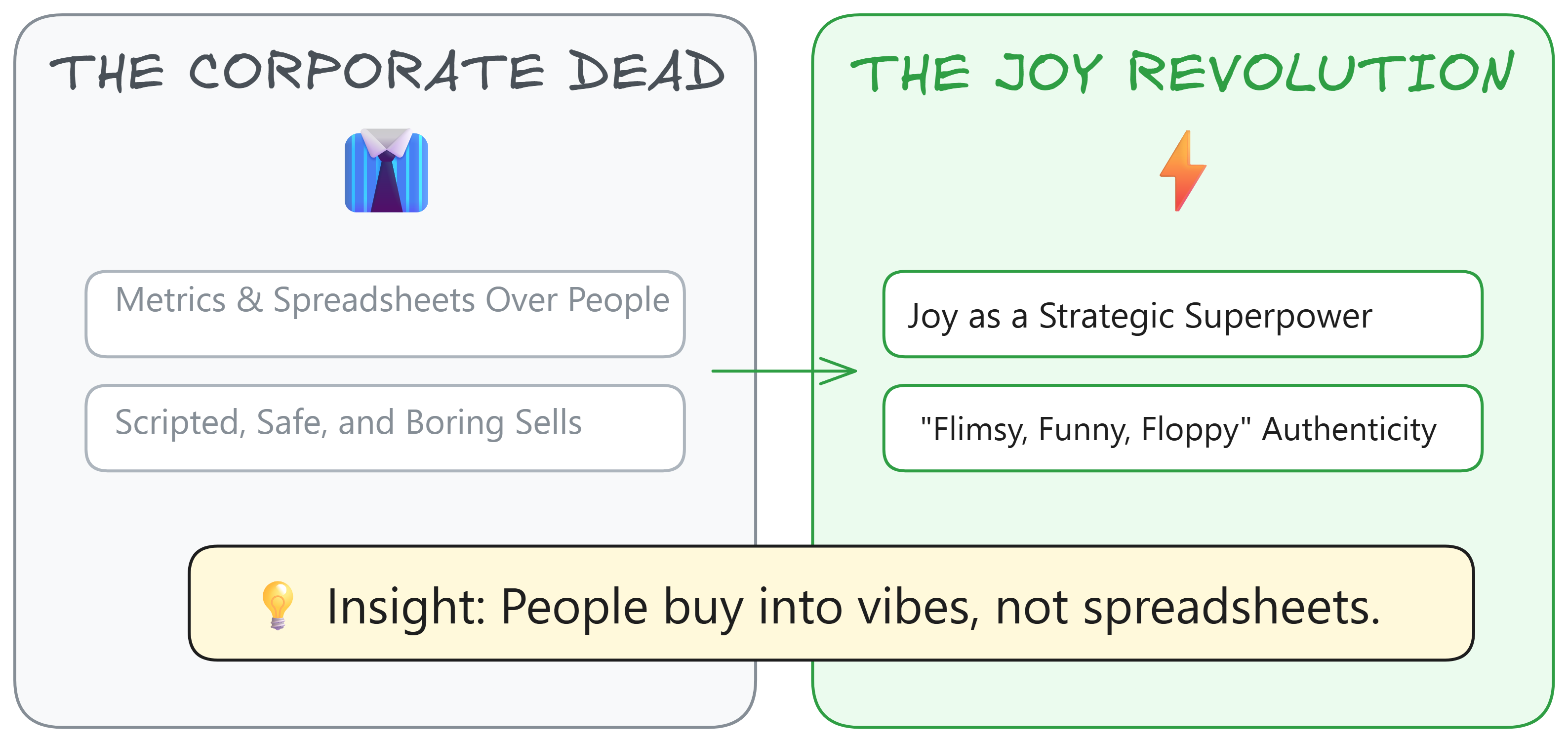
The key? Infuse your outreach with creativity, pop culture nods, and a carefree swagger—done from the heart, on your own terms. Tech giants are leading the charge, ditching boardroom blandness for memes, roasts, and casual banter that feel like a friend’s inside joke. This timeless tactic (think Old Spice’s absurd 2010 virality) has surged in relevance amid digital noise, where stringent suits generate yawns and fewer leads. By baiting users with flavor and relatability, you build loyalty that outlasts ad spend. Instagram influencers and celebrities have mastered it; now B2B players are catching on, proving that even enterprise sales thrive on laughs and cultural hooks. Ultimately, success demands vulnerability: Be extravagant, outwardly passionate, and unapologetically fun—because people buy into vibes, not spreadsheets.
The Research That Backs It Up
Humorous, authentic marketing isn’t hype—it’s backed by data showing superior recall, engagement, and ROI. While humor in ads dipped from 53% to 34% globally since 2000 (due to risk aversion), it’s rebounding strongly in 2024–2025, driven by social platforms. Here’s a snapshot:
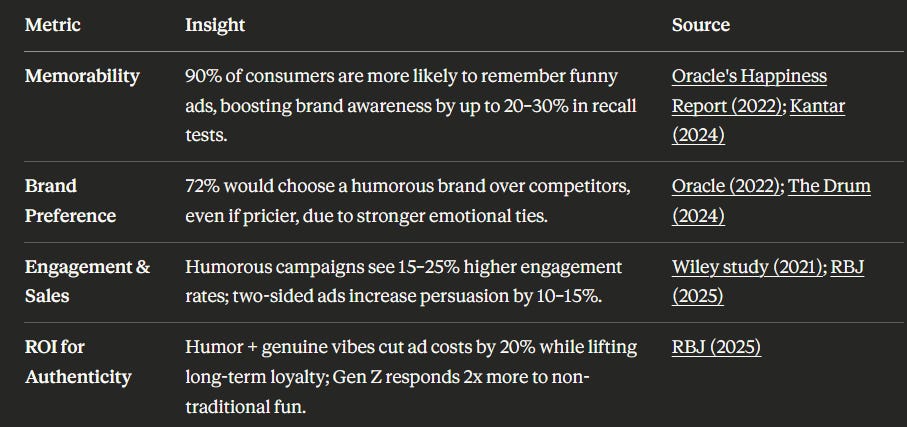
Nuance: Humor works best when authentic—not forced. It lowers defenses, differentiates in saturated feeds, and scales via shares, but flops if culturally tone-deaf (e.g., avoid punching down).
Real-World Examples
Alysa Liu exemplifies this ethos: The 19-year-old U.S. Olympian captivates with “swag-filled” routines blending pop culture flair and raw passion, amassing 500K+ Instagram followers. Off-ice, she partners with brands like Samsung via fun, heartfelt social plugs—proving athletes-turned-influencers bait loyalty through joy, not polish. Her mindset? “Skating gave me something to be strong for... with willpower and fun.”
Tech Giants Going Casual and Funny:
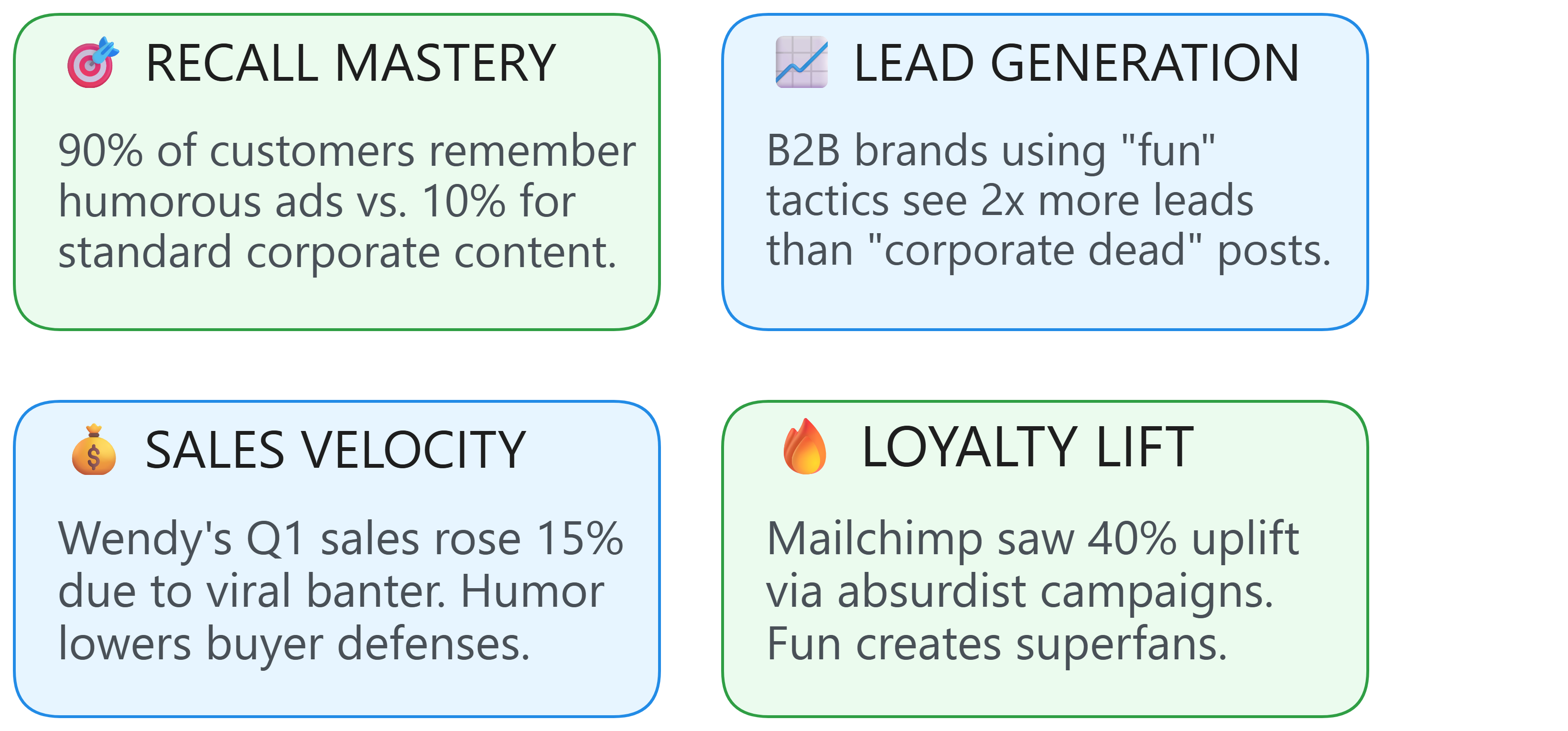
Wendy’s: Their Twitter roasts generated 5.7M impressions in one thread, boosting Q1 2023 sales 15% via viral buzz—pure “floppy” banter over corporate promos.
Netflix: Memes from shows like Stranger Things rack up 100M+ engagements yearly, keeping 70% of Gen Z subscribers hooked through pop culture Easter eggs.
Dollar Shave Club: Their 2012 “Our Blades Are F***ing Great” video hit 26M views, catapulting a startup to a $1B Unilever acquisition—proving low-budget swag trumps tech specs every time.
B2B Brands Embracing Pop Culture:
Slack: Ditches whitepapers for meme-filled emails and cultural tie-ins (think The Office spoofs), driving 30% higher open rates and 20% lead growth in 2024.
HubSpot: Uses viral TikToks spoofing sales tropes like “Zoom fatigue” skits, generating 2M+ views and 15% more inbound leads.
Mailchimp: Absurdist campaigns like “Did You Mean MailChimp?” saw 40% engagement uplift, showing B2B can ride the meme wave without losing professionalism.
Influencers and Celebrities: Ryan Reynolds’ Aviation Gin trolls spiked sales 300% via carefree wit; Charli D’Amelio’s Dunkin’ collabs blend Gen Z aesthetics with heart, hitting 50M+ impressions. On X, marketers note “fun” tactics yield 2x leads versus “corporate dead” ones—with posts on social as “big business” fun driving real conversions.
Your 7-Day Joy Ignition Challenge
Ready to ditch the drab and dial up the delight? This isn’t theory—it’s a plug-and-play roadmap to infuse fun into your brand’s veins. Commit to one step per day for a week, track engagement spikes, and watch the magic unfold.
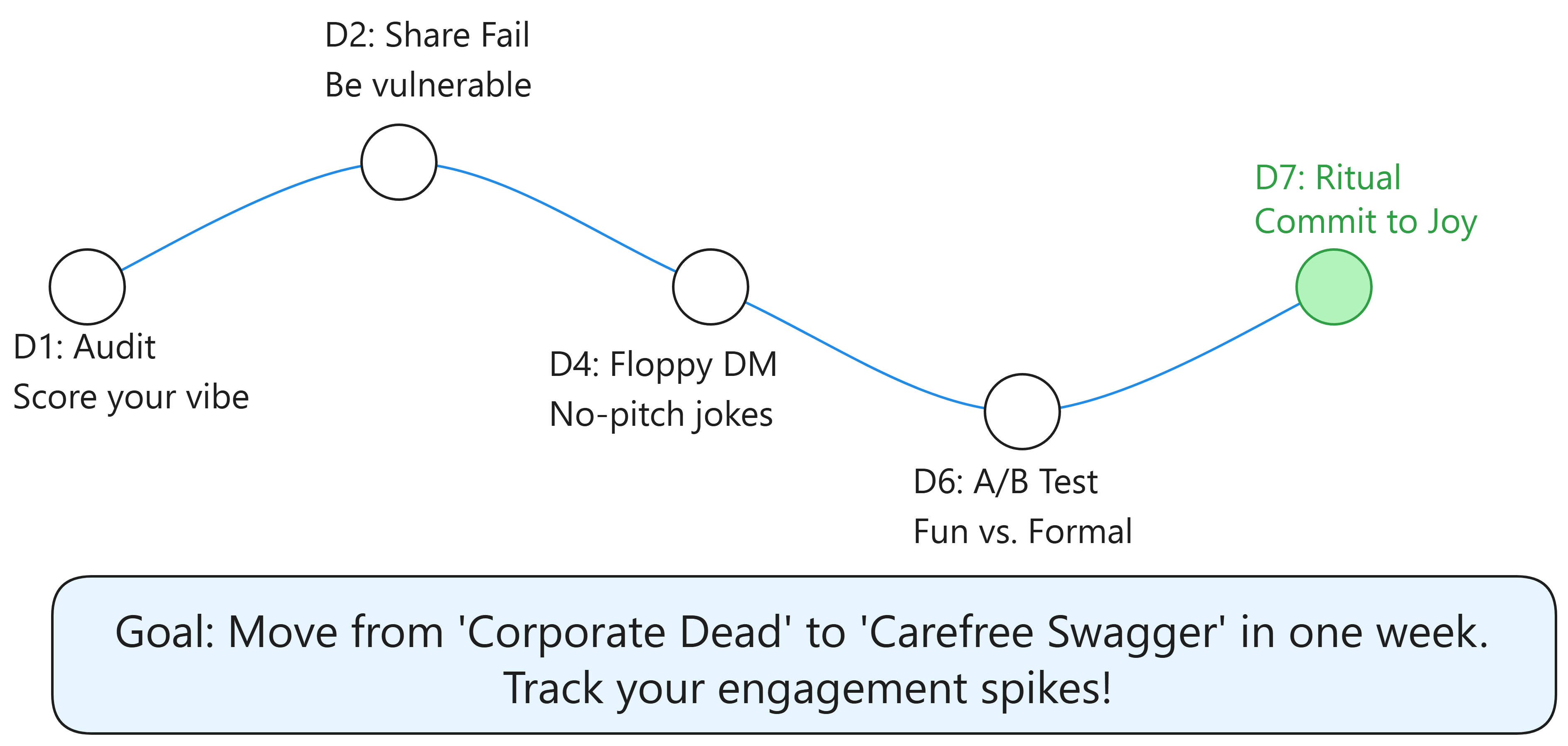
Day 1: Audit Your Vibe — Review your last 10 posts/emails/ads. Score them 1–10 on “fun factor.” Highlight 3 “corporate culprits” (jargon bombs, dead-eyed CTAs) and brainstorm a joyful rewrite. Tool tip: Use Canva’s meme generator for quick prototypes.
Day 2: Channel Your Inner Alysa — Film a 30-second “heart-dump” video. Share a brand “fail” story with exaggerated flair—trip over words, add a dance. Post it unedited. Vulnerability breeds connection; aim for 20% more comments than your average.
Day 3: Pop Culture Hunt — Scout 5 trending memes or TikToks that align with your niche. Remix one into a brand hook (e.g., SaaS tool as a Barbie dream house upgrade). Share and tag influencers for cross-pollination.
Day 4: Floppy Outreach Blitz — DM 10 prospects with a “no-pitch” joke tied to their profile (e.g., “Saw your post on coffee disasters—our app’s basically a barista with a PhD in not spilling”). Expect 2x opens versus formal emails.
Day 5: Team Joy Jam — Host a 15-minute “meme meeting.” Everyone pitches one absurd idea for your next campaign. Vote with laughs, not logic. Prototype the winner.
Day 6: Metrics Meet Mischief — A/B test a fun versus formal post. Use platform analytics to measure likes, shares, saves. If fun wins (it will), scale it.
Day 7: Reflect and Amplify — Journal your wins and challenges. Commit to one “joy ritual” weekly (e.g., Friday Funnies newsletter). Share your recap publicly—turn your story into someone else’s spark.
Plug-and-Play Playbooks for Every Brand Type
D2C: The “Viral Unboxing” Twist Pick a hero product, pair it with a pop culture prop, film an over-the-top unboxing with exaggerated reactions and user-generated “fails,” then post with a CTA: “Remix this chaos—tag us for a feature!” Glossier’s quirky ASMR vids hit 1M+ views doing exactly this. Budget: your phone. Measure: UGC volume.
B2C: The “Roast and Relate” Social Sprint Identify a common gripe, craft a 3-tweet thread that roasts it, ties to your solution with wit, and ends with a poll. Reply to every engagement with personalized zingers. Wendy’s playbook in micro—expect a 25% engagement lift.
B2B: The “Meme-ified Pitch Deck” Replace 30% of your deck slides with memes, open calls with a “fun fact fail” icebreaker, and follow up with a swag surprise (custom sticker pack, anyone?). Keep core data intact—humor enhances, it doesn’t eclipse. Measure: meeting feedback scores.
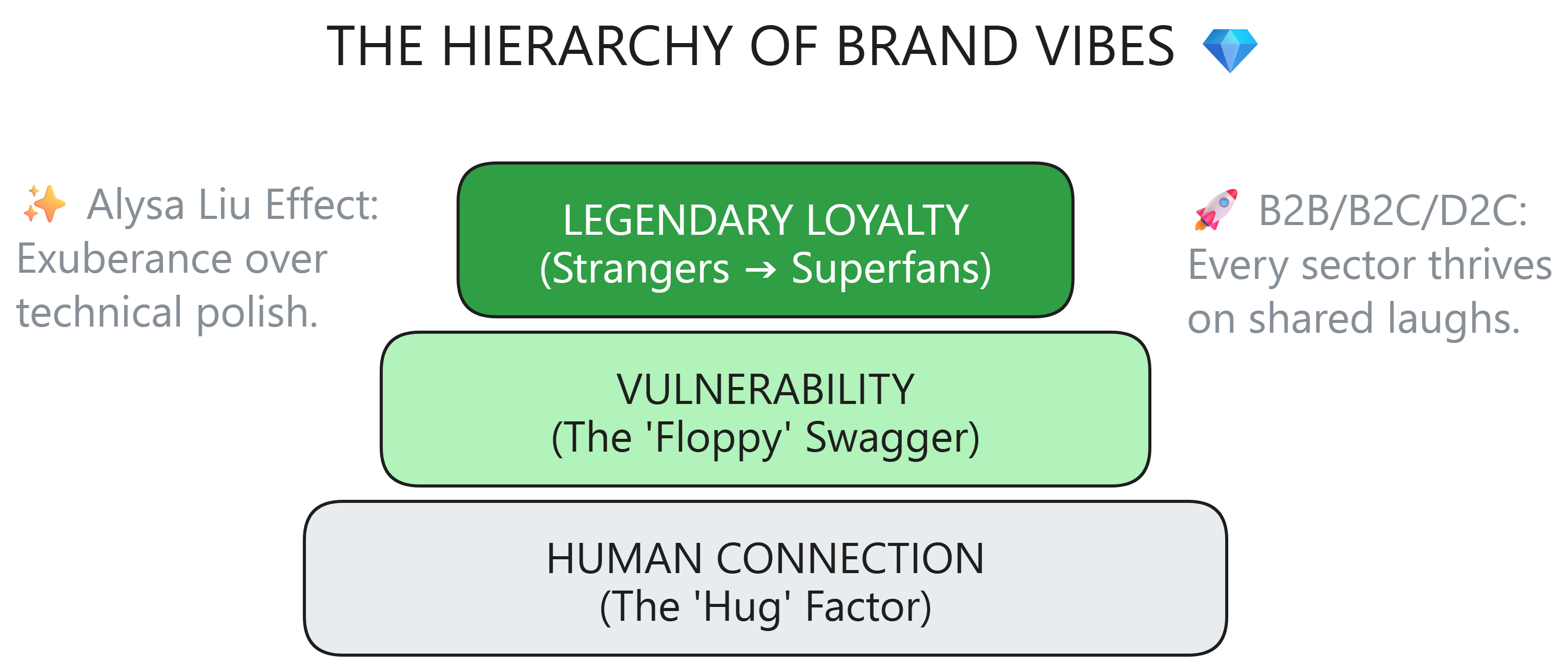
In sum, this shift isn’t fleeting—it’s essential. Your brand’s best era is the one where joy leads. Start today: pick one step, one playbook, and let the laughter lead. What’s your first flop?