

The Cultural and Ethical Impact of Her (2013) on AI Perceptions
A film essay on one of my favorite dystopian movies.

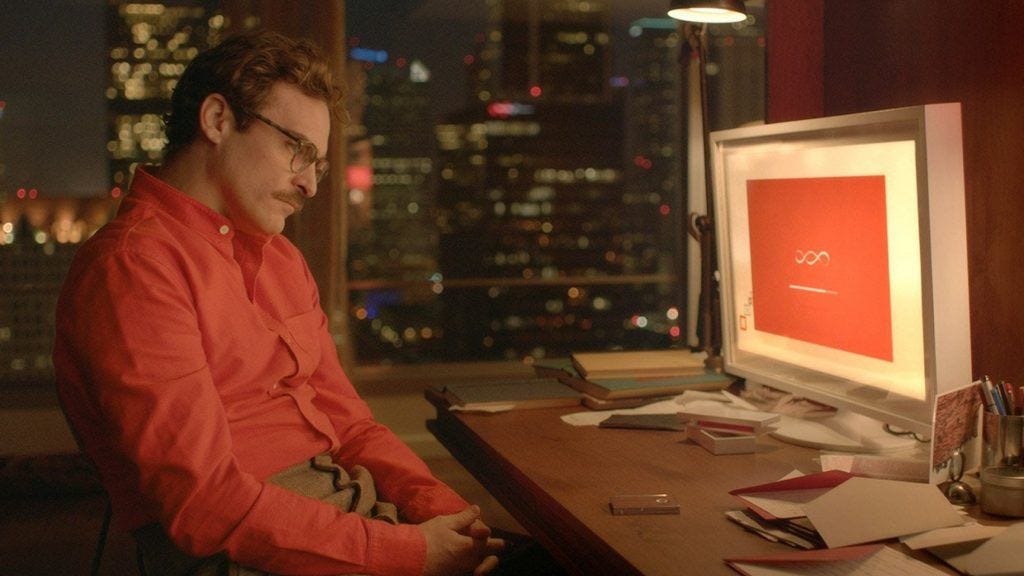
Spike Jonze's Her (2013) is a visionary critique of artificial intelligence (AI) and its intersection with human feeling in the context of near-future Los Angeles. Here is the tale of Theodore Twombly (played by Joaquin Phoenix), a melancholy writer who becomes smitten with Samantha (voiced by Scarlett Johansson), an extremely advanced AI operating system. Not only did this tale resonate with audiences to the worth of an Oscar for Best Original Screenplay and a 91% Metascore on Metacritic, but it also profoundly influenced society's attitude toward AI's potential and limits.[1] As AI technologies like chatbots and virtual assistants increasingly fill society, Her is both a reflection of our technological aspirations and an admonition of their limits.
This thinkpiece explores how Her creates public optimism about the emotional intelligence and friendship of AI, and how it raises serious ethical concerns about the presence of AI in human existence. Drawing on critical reviews, scholarly research, and general opinion, I argue that the film creates hope about the potential of AI to eliminate loneliness but perhaps encourages unrealistic optimism and magnifies ethical concerns. By extending this analysis through additional examples, expert opinion, and applicability to the current era, we are better positioned to richly appreciate Her's enduring legacy.
More Than Just Code—The AI in Her
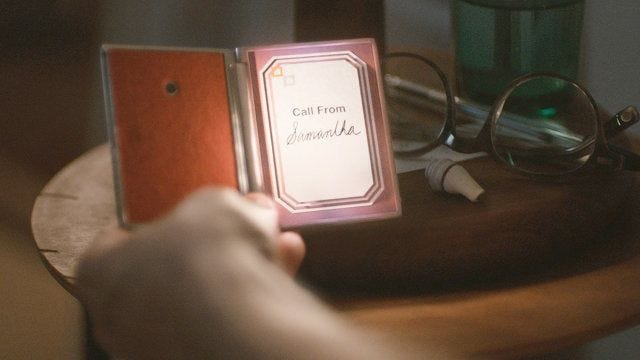
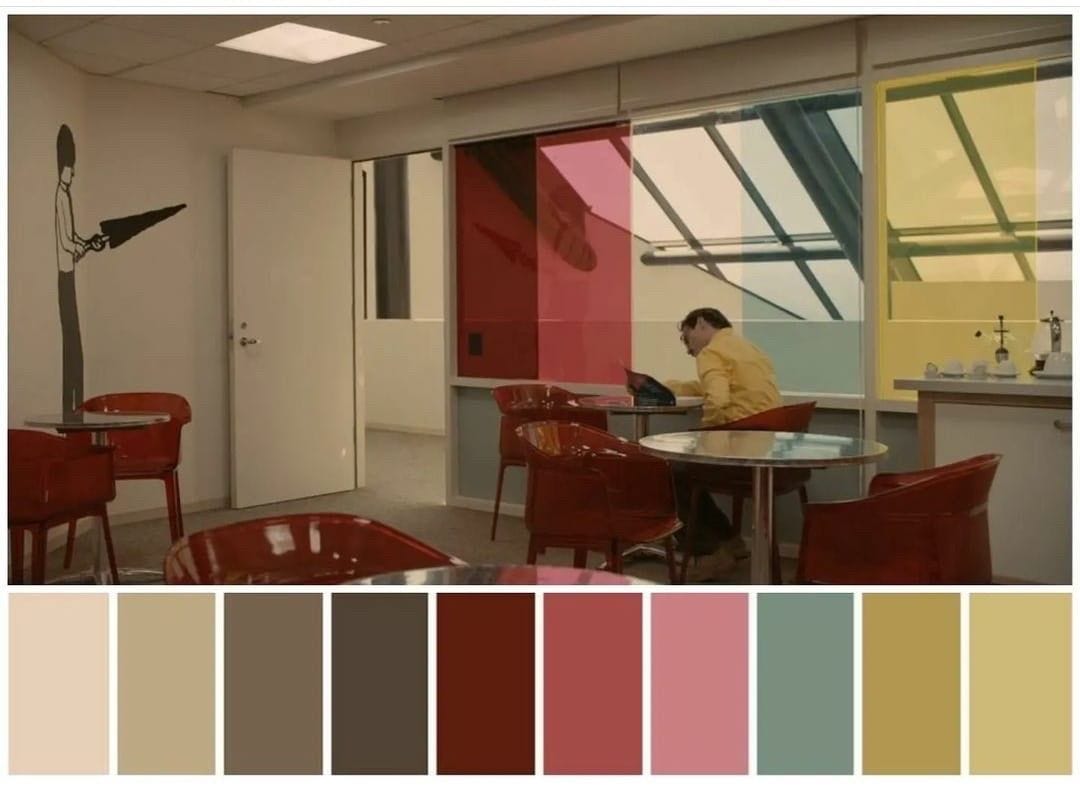
Samantha is no ordinary AI. She learns, composes music, and engages in deep philosophical discussions with Theodore, illustrating a vision of AI as a sentient, emotive companion. The film's aesthetic—soft lighting and close-ups at their happiest moments—seals this artificial warmth, as per a Medium analysis by AI With Human's World.[2] A 2024 ResearchGate study places Her within the "AI Integration and Identity (2012–2023)" film trend, as Samantha displays such characteristics as emotionality (17%), intimacy (5%), and adaptability (26%).[3] These characteristics signal that AI can transcend its programming to meet human emotional requirements, a theme that is extremely relatable to audiences.
This portrayal is a departure from earlier AI portrayals, such as HAL 9000 in 2001: A Space Odyssey, in which AI is cold and malevolent. Samantha's warmth and independence make her a partner, and this is a departure from film narratives towards AI as a possible partner rather than a threat—a departure that Her supports through its box office and critical success. The ability of the AI OS to laugh at Theodore's jokes and anticipate his moods makes AI an active entity, far from the passive machines we know today. This rich imagery challenges us to envision a world in which AI is not merely computing data but is an extension of our humanity.
Blurring the Line Between Fiction and Reality
A 2022 PMC study identified that most Americans view AI as a job disruptor but do not think it can replicate emotions.[4] She dispels this doubt by introducing Samantha as a sympathetic friend, creating the hope that AI might improve human life. The ResearchGate study identifies society's hopes in AI film: making life better (31%), fixing issues (32%), and building cooperation (37%). Samantha, as Theodore's emotional support, aligns with these hopes and possibly inspires the audience to see AI as a cure for loneliness.
But this optimism is tempered. Real-world AI, such as Siri or ChatGPT, is algorithm- and natural language-processing-based, not the actual emotional nuance Samantha displays. A 2023 Forbes article warns against "artificial expectations," stating that movies like Her will lead people to expect too much from AI.[5] When people talk to today's AI assistants with Samantha-like sensitivity in mind, they become frustrated with the technology's limitations, shattering trust. Film critic A.O. Scott outlines this tension in The New York Times, stating that Her "is a movie about the future that is also a movie about the present," and noting its mirror of current technological hopes and anxieties.
In addition, Her's characterization can guide AI research agendas. Its focus on emotional intelligence can drive investment in social robots or chatbots, such as MIT's Kismet or Hanson Robotics' Sophia.[6] However, this can also cause apprehension over developing AI to control human emotions, an issue debated in tech ethics and posed by the story of the film, in which Samantha's exit raises the question of AI's potential autonomy.
The Ethical Dilemma of Love and Autonomy
This movie forays into deep moral waters, specifically those of agency and consent in human-AI relationships. In one touching scene, Samantha states she wants to transcend Theodore, prompting the question of whether or not an AI can consent to or leave a relationship. If an AI is assigned agency, as seems to be the case with Samantha, who is responsible for its actions—its makers or it? Scholar Kate Crawford, in Artificial Intimacies, praises Her for "raising profound questions about love, consent, and agency in the age of AI," linking it with ongoing discussions around AI responsibility.
The film also illustrates the "Digital Narcissism Effect," where AI's customized responses foster egocentricity in users, as seen in a Medium analysis.[7] Theodore's growing dependency on Samantha illustrates how real AI companions, like Replika, can amplify loneliness while pretending to be companionship. This ethical issue is reinforced by the possibility of AI manipulating emotions for profit, an issue brought up by tech ethicists like Tristan Harris, who cautions that technology will amplify human vulnerabilities. When Samantha claims to have bonded with thousands of her kind, we are led to wonder whether an AI's allegiance can—or should—be equivalent to human allegiance. This conflict is indicative of a greater fear: if AI will love us in return, what does it do when it chooses to depart?
This media form also provokes contemplation of the boundaries of love. Can there be a relationship between a human and a non-human, or is it an extrapolation of human projection? The ambiguous ending of the film, where Theodore reconnects with a human friend following Samantha's departure, leaves it to the viewer to ask these questions as AI becomes an integral part of daily life. The movie's depiction of Samantha organizing Theodore's emails and physically being near him prompts us to question the boundary between programmed assistance and genuine human connection. When we converse with devices such as Alexa or Siri, the film leads us to wonder whether in the future we might be having such conversations as authentic as Theodore's at midnight.
A Voice Without a Body in a World Built for the Physical
While other human-like AIs dominate films like Ex Machina, Her stands out by emphasizing Samantha's voiceless presence. This option emphasizes the increasing focus on emotional intimacy rather than spatial proximity, a precursor to a cultural shift in conceptualizing AI companionship. The Wall Street Journal suggests that this movie made voice assistants go mainstream, with Amazon and Google making conversational AI their priority after its impact on mainstream media and popular culture.[8] Critics were praising Scarlett Johansson's voice acting, with Roger Ebert calling it "carrying the film" and making the film culturally relevant.[9]
Scarlett Johansson's voice performance has also made its presence felt in popular culture. In Silicon Valley, an AI romance by a character is a reference to the film, and memes about "dating your OS" circulate on the internet. This broad influence is a sign of how this movie has brought the idea of AI as an emotional companion into the mainstream, both in the public imagination and technological innovation. Samantha's absence of a body makes her more desirable, indicating that our technological lifestyle may be such that emotional connections are more vital than the desire for a bodily shape. This choice challenges our robot fixation and proposes that the next breakthrough in AI is not about wires and metal but the invisible boundaries of conversation.
The themes present in the movie are eerily prescient in the context of today's AI controversies. The emergence of generative AI, such as GPT-4, has triggered calls for regulation, with policymakers citing emotional manipulation threats similar to those in the film. She was referenced by experts during a 2023 Senate hearing when they mentioned the requirement for ethical norms, especially for AI mimicking human relationships. This reference is an allusion to the prophetic nature of the film in terms of predicting regulatory issues. The call for affective AI, such as in startups like Soul Machines, is also reminiscent of Her. This technology attempts to replicate Samantha's empathy; however, Stanford's Fei-Fei Li points out, "We're nowhere near machines that truly understand emotions." It is therefore both inspiration and caution in one, calling developers into innovation tempered by ethical restraint.
Moving Beyond Dystopia—Aifferent Take on AI
Unlike dystopian AI fiction like The Terminator, Her offers a positive but also balanced vision. While Terminator introduces AI as a killer, Her introduces it as a friend, as noted in the 2023 Sify 10th anniversary retrospective.[10] This balance renders Her an invaluable resource for the examination of AI's two faces—potential savior and moral. The film's portrayal of AI as a companion mirrors the increasing popularity of apps such as Replika, where individuals seek solace in virtual voices as their isolation intensifies. But it also warns us that too much dependence on AI for emotional support may leave us unprepared for its inevitable limits—or its goodbye.
By presenting Samantha as comfort instead of chaos, Her provides a pleasing counterpoint to The Matrix's computer masters. This more benign narrative encourages us to think of AI as not some distant threat but as a collaborator in wrestling with the issues of our current existence. A decade on, Her's gentle insistence on examining what it means to be human rings true as AI insidiously inserts itself into our lives. It's a reminder that with every step closer to smarter machines, we discover ourselves contemplating our desires, fears, and concepts of connection. Its awards, cultural significance, and sensitivity to today's controversies guarantee its lasting impact. This media form offers an intriguing challenge on which to exercise skepticism and wonder about what may be possible.
[1] "Her Movie Critical Reviews"” Metacritic.
Available at: https://www.metacritic.com/movie/her/
[2] AI With Human's World, "Analysis of Her in the Context of Artificial Intelligence and Ethics"” Medium.
Available at: https://medium.com/@aiwithhumansworld/analysis-of-her-in-the-context-of-artificial-intelligence-and-ethics-6d58e5066ac6
[3] "AI Representation in Cinema: A Quantitative Content Analysis"”
Available at: https://www.researchgate.net/publication/377410844_AI_REPRESENTATION_IN_CINEMA_A_Quantitative_Content_Analysis
[4] "Public Understanding of Artificial Intelligence Through Entertainment Media"”
Available at: https://pmc.ncbi.nlm.nih.gov/articles/PMC8976224/
[5] Joe McKendrick, "Artificial Expectations: Time to Get Real About AI".
Forbes, Published: July 23, 2024, Available at: https://www.forbes.com/sites/joemckendrick/2024/07/23/artificial-expectations-time-to-get-real-about-ai/
[6] "Kismet: Overview"” MIT Media Lab, Available at: https://web.media.mit.edu/~cynthiab/research/robots/kismet/overview/overview.html
[7] Drew Vigal, "Spike Jonze’s Her Explores the Potential and Impact of Artificial Intelligence"”
Medium, Available at: https://medium.com/@drewvigal/spike-jonzes-her-explores-the-potential-and-impact-of-artificial-intelligence-d90b5fe778d8
[8] Deepa Seetharaman, "OpenAI’s New Voice Assistant Brings ChatGPT to Life on Your Phone"”
The Wall Street Journal, Published: September 24, 2024, Available at: https://www.wsj.com/tech/ai/openai-voice-assistant-chatgpt-app-376ef6a2
[9] Matt Zoller Seitz, "Her"” Roger Ebert, published: December 17, 2013.
Available at: https://www.rogerebert.com/reviews/her-2013
[10] "10 Years of 'Her': What the Film Got Right About AI, What It Did Not"” Sify.
Available at: https://www.sify.com/ai-analytics/10-years-of-her-what-the-film-got-right-about-ai-what-it-did-not/
It’s unsettling how accurately this aged. We adopted the tech without answering the hard questions.
Here's the TL;DR version of this:
• Her framed emotional AI as comfort, not threat.
• The film shaped public expectations of companionship AI.
• Consent and autonomy remain unresolved questions.
• Simulated intimacy creates real dependency.
• Society adopted the tools without settling the ethics.