

My Two-Year Journey at AccuKnox - From Intern to Technical Specialist
How I Grew in a Fast-Moving SaaS Environment with Insights from Two Years in Cloud-Native Security Sphere

As I near my two-year milestone at AccuKnox, a pioneering Cloud Native Security SaaS company, I’ve been reflecting on a journey that feels exhilarating, humbling, and relentlessly educational. This isn’t a polished tale of effortless victories; it’s a gritty narrative of growth through challenges, adaptability in a high-stakes field, and the pursuit of mastery in a domain where innovation races ahead of convention. For professionals eyeing the cloud-native security landscape or contemplating life in a startup, this post offers a window into the real-world lessons and technical evolution I’ve experienced at AccuKnox.
Here’s the TLDR version of what I’ll be discussing in this long, sprawling post.

🎊 Shoutout to Syed Hadi for encouraging me to make this post and always presenting ideas and strategies to drive me towards growth.
1. Setting the Stage
May 2023 marked my entrance into the specialized world of cloud-native security—a domain that would become both my professional focus and passion over the next two years. As I stepped into my role at AccuKnox, the cloud security landscape was experiencing seismic shifts. Organizations were rapidly adopting containerized architectures, Kubernetes was cementing its position as the orchestration platform of choice, and security teams were scrambling to adapt traditional security models to these distributed environments.
The timing couldn't have been more critical. The previous year had witnessed several high-profile security incidents targeting cloud-native infrastructure. The CNCF's 2022 Security Survey revealed that 96% of organizations were experiencing at least one serious security incident in their Kubernetes environments. Supply chain attacks were increasing in frequency and sophistication, with the software ecosystem still recovering from the aftershocks of Log4Shell and the SolarWinds breach.
Against this backdrop, Gartner had just positioned Cloud-Native Application Protection Platforms (CNAPPs) as an emerging category in its security hype cycle—a category that promised to unify disparate security tools into comprehensive platforms that could secure applications throughout their lifecycle. This was the domain where AccuKnox was staking its claim.

My journey to AccuKnox represented a convergence of interests in technology, security, and communication. With a background in technical writing and a growing fascination with cloud computing, I was drawn to the challenge of translating complex security concepts into accessible content that could drive both understanding and adoption. The startup environment promised a steep learning curve and the opportunity to wear multiple hats—exactly what I was seeking.
The cloud-native security field demanded a unique blend of technical knowledge and communication skills. As I would soon discover, effectively explaining the nuances of runtime security, network policy enforcement, and vulnerability management required both depth of understanding and clarity of expression. In the words of cybersecurity thought leader Bruce Schneier, "Security is a process, not a product," and communicating this process-oriented mindset would become central to my role.
My first day of orientation included a memorable conversation with our CEO, who emphasized that AccuKnox wasn't just building security tools—we were pioneering a security philosophy centered on zero-trust principles and cloud-native architecture. "We're not just protecting assets," he explained, "we're enabling digital transformation through security that moves at the speed of cloud."
This introduction set the stage for what would become an intensive period of professional growth, technical learning, and increasing responsibility. Little did I know then that within two years, I would transition from an intern focused on basic content tasks to a technical specialist managing documentation, website infrastructure, marketplace integrations, and strategic content initiatives across the organization.
The learning curve would be steep, the challenges numerous, but the opportunity to contribute to securing the cloud-native ecosystem—an infrastructure layer powering much of the modern digital economy—made the journey worthwhile. This is the story of that journey.
2. A Background of AccuKnox
To understand my evolution at AccuKnox, it's essential to first understand the company itself—its origins, technical foundation, and position in the market.
Founding Story and Vision
AccuKnox emerged in 2019 from a collaboration between industry veterans with complementary expertise. Nat Natraj brought extensive experience in enterprise security and go-to-market strategy, having previously founded Apcera (acquired by Ericsson). Asif Ali and Rahul Jadhav contributed deep technical expertise in cloud-native technologies and security architecture. The team was completed by Phil Porras, a renowned researcher in network security from SRI International.
The founding vision was both ambitious and timely: to create a security platform that could address the unique challenges of cloud-native environments by implementing zero-trust principles at every layer of the application stack. This vision was informed by a critical insight—that traditional security tools were fundamentally mismatched to the ephemeral, distributed nature of modern cloud applications.

The company's technical approach was influenced by its collaboration with SRI International, known for its groundbreaking work in cybersecurity research. This partnership gave AccuKnox access to advanced security concepts that would later become core differentiators in its product offering.
In conversations with early employees, I learned that the company name itself reflected its mission: "Accu" represented accuracy and precision in security controls, while "Knox" evoked the impenetrability of Fort Knox—a fitting metaphor for the security posture the platform aimed to establish.


The Technical Foundation
At its core, AccuKnox built its platform on the zero-trust security model—a framework that assumes breach and verifies every access request as though it originates from an uncontrolled network. This approach was particularly well-suited to cloud-native environments, where traditional perimeter-based security had become ineffective.
The technical architecture of the AccuKnox platform revealed sophisticated engineering decisions. The system leveraged eBPF (extended Berkeley Packet Filter) technology—a revolutionary approach that allowed security controls to be implemented at the Linux kernel level without modifying the kernel itself. This provided unprecedented visibility into system calls, network communications, and file access patterns, enabling the platform to detect and prevent security violations in real-time.
The platform's capabilities span several critical dimensions of cloud-native security:
Runtime Security: Using behavioral analysis and policy enforcement to detect and block anomalous activities in containers and microservices during execution.
Network Security: Implementing fine-grained microsegmentation through Kubernetes Network Policies and extending these controls to non-Kubernetes workloads.
Vulnerability Management: Scanning containers, infrastructure-as-code templates, and application dependencies for vulnerabilities throughout the development lifecycle.
Compliance Automation: Continuously validating environments against industry standards like CIS Benchmarks, NIST, and PCI-DSS.
AI/ML Model Protection: Securing machine learning pipelines against poisoning attacks and unauthorized access—a cutting-edge capability addressing emerging threats.
What made AccuKnox particularly innovative was its unified approach. While competitors often addressed individual security challenges with point solutions, AccuKnox integrated these capabilities into a coherent platform that provided consistent security across environments—from public clouds (AWS, GCP, Azure) to private data centers, edge installations, and even 5G infrastructure.
Market Positioning and Investment Landscape
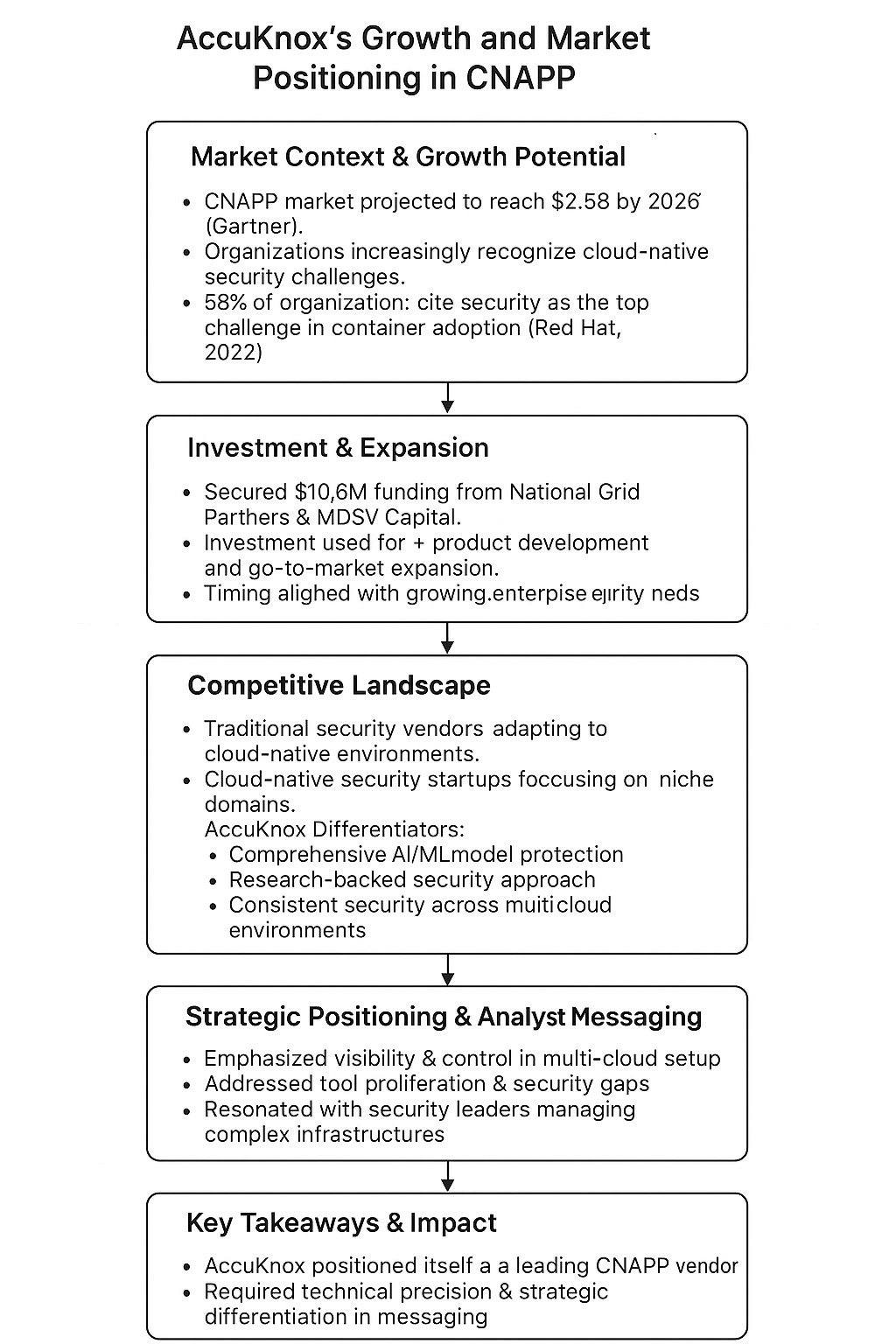
AccuKnox positioned itself in the rapidly growing CNAPP market, which Gartner predicted would reach $2.5 billion by 2026. The company secured $10.6 million in funding from National Grid Partners and MDSV Capital—a significant achievement in an increasingly selective investment climate.
This investment enabled AccuKnox to accelerate product development and expand its go-to-market efforts. The timing proved advantageous, as organizations were increasingly recognizing the security challenges of cloud-native architectures. A 2022 Red Hat survey revealed that 55% of organizations considered security their top challenge in adopting containers, creating a clear market need for AccuKnox's solution.
The competitive landscape included both established security vendors attempting to adapt their offerings to cloud-native environments and cloud-native security startups focused on specific security domains. AccuKnox differentiated itself through its comprehensive approach, research-backed technology, and unique capabilities in areas like AI/ML model protection.
In analyst briefings I later helped prepare, our positioning emphasized the platform's ability to provide consistent security controls across heterogeneous environments, addressing a key pain point for enterprises managing complex, multi-cloud infrastructures. The message resonated with security leaders grappling with tool proliferation and visibility gaps.
As the company grew, it established strategic partnerships with cloud providers and security ecosystem players. These partnerships extended AccuKnox's reach and enhanced its credibility in the market. The platform became available on major cloud marketplaces—AWS, GCP, Azure, Oracle, Alibaba Cloud, and VMware—making it accessible to a global customer base.
Understanding this company context proved invaluable as I developed content and messaging. The technical depth of the platform demanded precision and expertise in communication, while the competitive landscape required clear articulation of differentiators. As I immersed myself in this environment, I gained not just technical knowledge buthe t strategic perspective on the cloud-native security market—insights that would inform my growing responsibilities at AccuKnox.
3. From Intern to Contributor
My journey at AccuKnox began with what appeared to be a straightforward mandate: researching emerging threats, studying cloud-native technologies, and contributing to the company's digital presence. What this job description didn't convey was the extraordinary breadth of skills I would develop and the steep learning trajectory that awaited me in a fast-scaling startup environment.
First Assignments and Learning Curve
My first week coincided with the company's preparation for a major industry event—KubeCon EU 2023. I was immediately tasked with developing landing pages that would capture the attention of security professionals attending the conference. This initial assignment revealed the true nature of technical marketing in a specialized domain: it required both technical accuracy and compelling messaging, a balance that would become a recurring theme throughout my tenure.
The learning curve was vertiginous. Within days, I was immersed in the taxonomy of cloud-native security, distinguishing between CWPP (Cloud Workload Protection Platform), CSPM (Cloud Security Posture Management), and CNAPP (Cloud-Native Application Protection Platform). I pored over technical documentation, research papers, and analyst reports to develop a foundational understanding of these concepts.
My background in technical writing and software engineering, with an understanding of cloud technologies, proved valuable, but insufficient. I needed to rapidly develop domain expertise in Kubernetes architecture, container security, and zero-trust principles. This necessitated close collaboration with engineering teams who patiently explained complex concepts and reviewed my early content attempts.
One senior engineer took particular interest in my development, setting up weekly sessions to walk through architectural diagrams and explain the technical underpinnings of the platform. "If you're going to write about our eBPF-based security controls," he explained, "you need to understand how eBPF works at the kernel level." These informal mentoring sessions proved invaluable, accelerating my learning far beyond what would have been possible through self-study alone.
The pace was relentless but exhilarating. Each day brought new technical concepts to master and communication challenges to solve. I recall spending an entire weekend researching Kubernetes admission controllers to write a technical blog post on how they could be leveraged for security—a topic that had seemed impenetrably complex just weeks earlier.
Content Development in a Technical Domain
As my understanding deepened, my responsibilities expanded. By my second month, I was composing blog posts, white papers, and e-books on topics ranging from supply chain security to zero-trust implementation in Kubernetes environments.
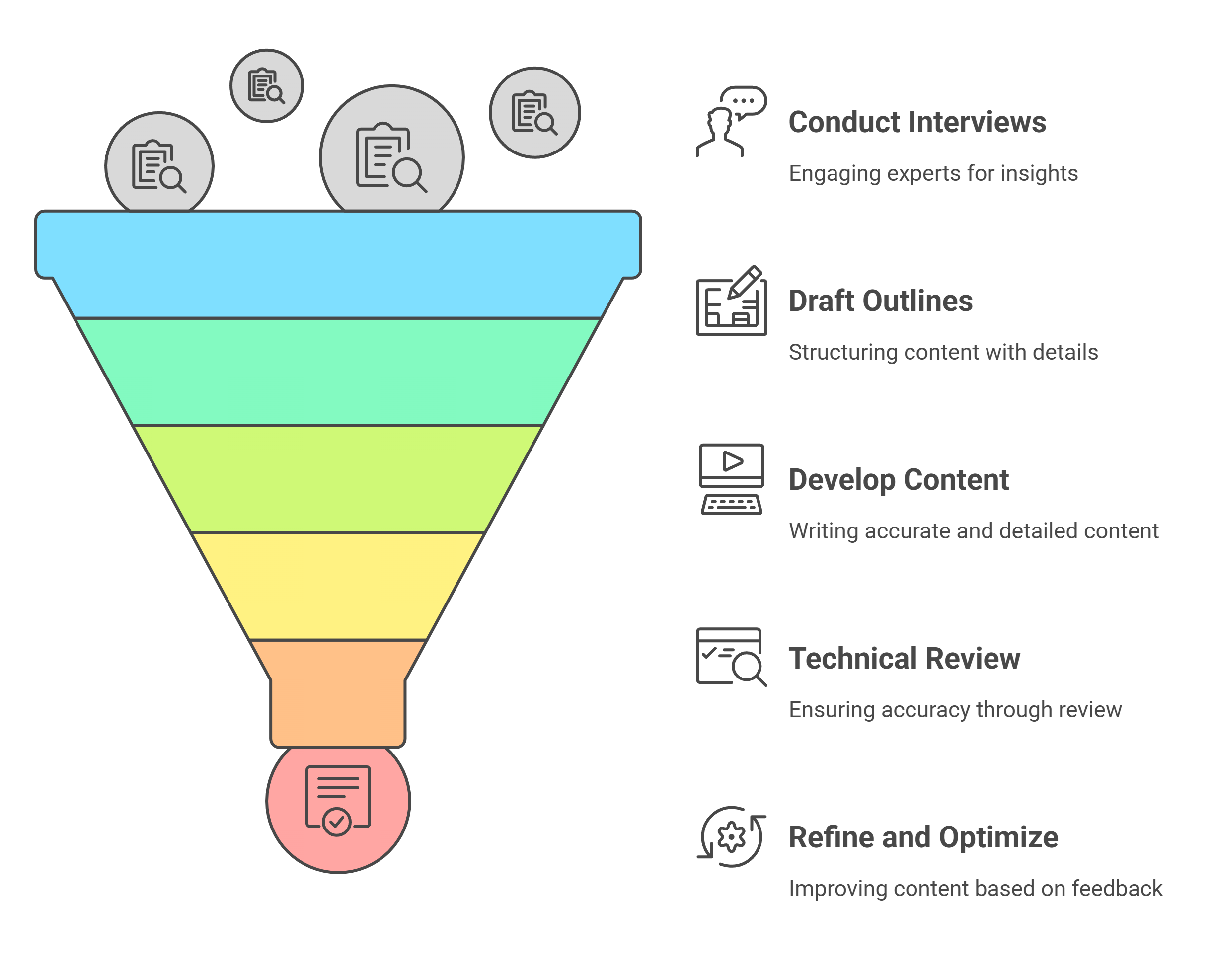
The technical blogging process required a methodical approach. For each post, I would:
Research emerging threats or security capabilities relevant to our audience
Interview subject matter experts within the company
Draft comprehensive outlines incorporating technical details and business impacts
Develop the content with careful attention to technical accuracy
Submit for technical review by engineering teams
Refine based on feedback and optimize for SEO
Coordinate with design teams for supporting visuals
This process for a single blog post could span days, with multiple review cycles ensuring both technical accuracy and strategic messaging alignment. The standard was exceedingly high—our audience included security architects, DevOps engineers, and CISOs who would immediately detect any technical imprecision or oversimplification.
One particularly challenging project was an e-book on "Implementing Zero Trust in Cloud-Native Environments." The topic required synthesizing complex security frameworks, cloud architecture principles, and practical implementation guidance. The final document spanned 35 pages and required input from seven different technical experts across the organization. The process taught me invaluable lessons about project management, technical consensus-building, and translating expert knowledge into accessible content.
Throughout this period, I maintained rigorous attention to detail and adherence to deadlines—qualities that did not go unnoticed in a startup environment where resources were perpetually constrained. My ability to deliver high-quality technical content on schedule established my reputation as a reliable contributor.
Building the Digital Foundation
Beyond content creation, I was tasked with building out the company's digital presence—a responsibility that expanded my technical skills in unexpected directions. The company's website needed comprehensive development, following the hub-and-spoke content model to organize our growing portfolio of resources.
This work introduced me to WordPress development, SEO principles, and web analytics—technical skills adjacent to my content responsibilities but critical for maximizing the impact of our digital assets. I learned to optimize page load times, implement tracking mechanisms, and structure content for both search engines and human readers.
The challenge extended beyond technical implementation to strategic planning. I needed to design an information architecture that would accommodate our evolving product offerings while maintaining a coherent narrative for visitors. This required close collaboration with product management to understand upcoming features and positioning shifts.
My role in building this digital foundation exposed me to the technical infrastructure supporting our marketing operations. I became proficient in Google Analytics, Tag Manager, and Search Console—tools that would later prove essential for measuring the effectiveness of our content strategy.
As my first six months drew to a close, a significant shift occurred. What had begun as an internship transformed into a full-time technical specialist role. My responsibilities had expanded from basic content tasks to managing critical aspects of the company's digital presence and technical communication strategy. This transition reflected both my growing capabilities and the company's lean operating model, where roles were defined more by impact than by traditional boundaries.
The period concluded with a key achievement: the publication of our first comprehensive white paper on "Cloud-Native Security Maturity Models," which was downloaded by hundreds of security professionals within weeks of release. This tangible success validated the approach I had developed and set the stage for the expanded responsibilities that would follow.
4. Expanding Responsibilities
As I moved beyond my initial six months at AccuKnox, I encountered what would become one of my most significant contributions to the company: completely reimagining our technical documentation. This project exemplified the evolution of my role from content creator to strategic technical communicator.
Reimagining Help Documentation
The situation I inherited was challenging. Our technical documentation consisted of scattered resources—GitHub READMEs, PDF guides, and an incomplete documentation site—that failed to provide a cohesive user experience. As our product expanded rapidly with new features and integrations, the documentation gap was becoming increasingly problematic.
After conducting an audit of existing materials and analyzing support tickets to identify common user challenges, I developed a comprehensive plan to overhaul our documentation. The proposal included three key objectives:
Creating a single, authoritative source of information organized by user journey
Implementing a modern, searchable interface that would facilitate self-service
Establishing sustainable processes for maintaining documentation accuracy as the product evolved
The plan received enthusiastic support from leadership, who recognized that effective documentation was not merely a support resource but a critical component of product adoption and customer success.
The scope was ambitious: developing over 200 new documentation pages covering everything from initial installation to advanced security policy configuration. Each section required deep technical knowledge and an understanding of user workflows. I worked closely with product managers to map documentation to user personas—from security administrators to DevOps engineers to compliance analysts—ensuring that each audience would find relevant guidance.
Among the innovations I introduced was a "Quick Start" section that provided streamlined setup instructions for different environments. This approach was inspired by successful documentation sites like Stripe and Hashicorp, which prioritized getting users to their first successful experience. The analytics later confirmed this approach's effectiveness, showing that users who completed the Quick Start guide were significantly more likely to proceed to advanced feature configuration.
The MkDocs Implementation Journey
After evaluating several documentation platforms, I selected MkDocs as our documentation framework. The decision was based on several technical considerations:
Markdown-based authoring that would integrate with our Git workflows
Flexible theming capabilities to maintain brand consistency
Built-in search functionality
Support for code highlighting across multiple languages
Ability to implement versioning for different product releases
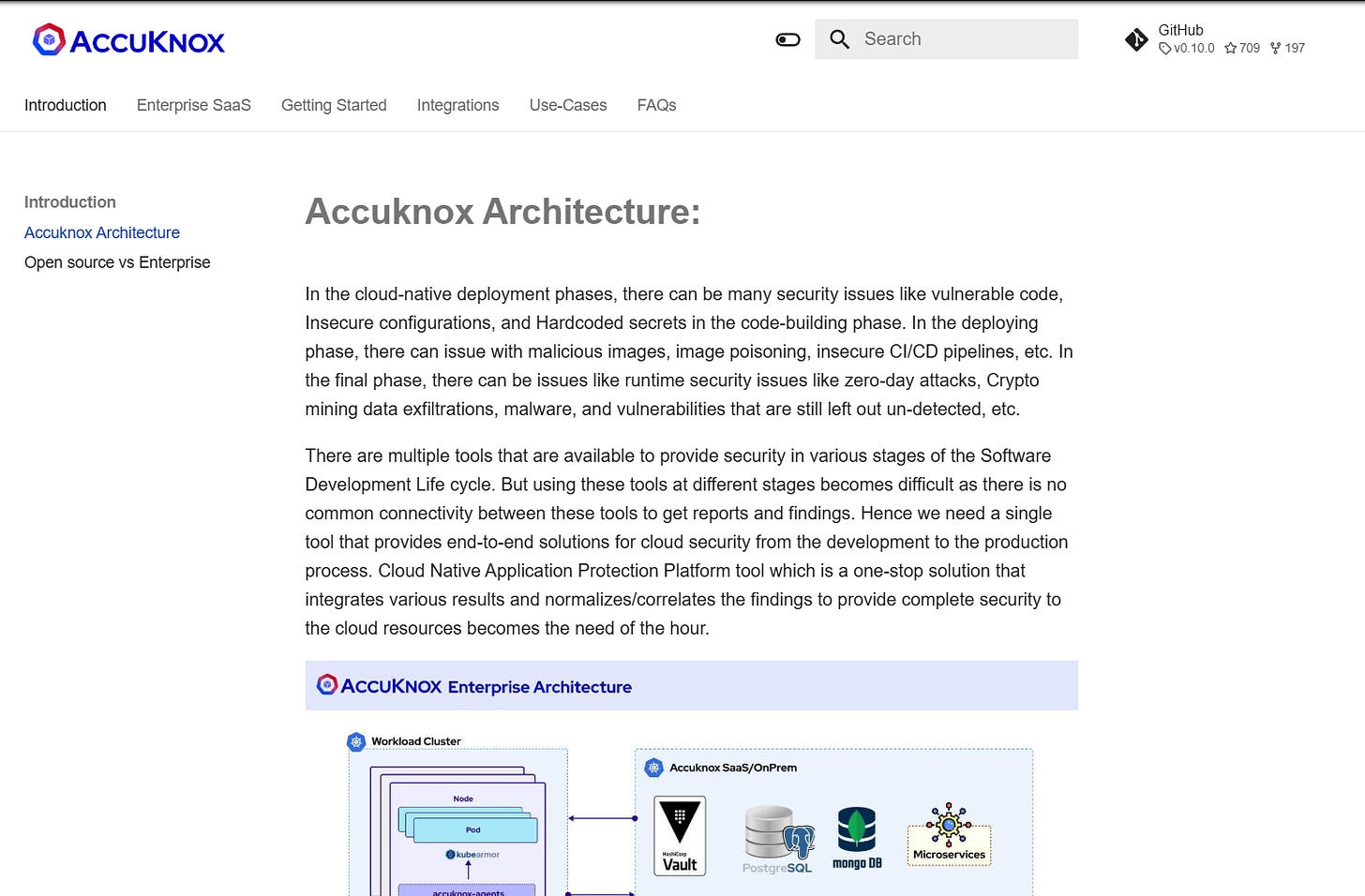
AccuKnox Documentation in 2023; before revisions.
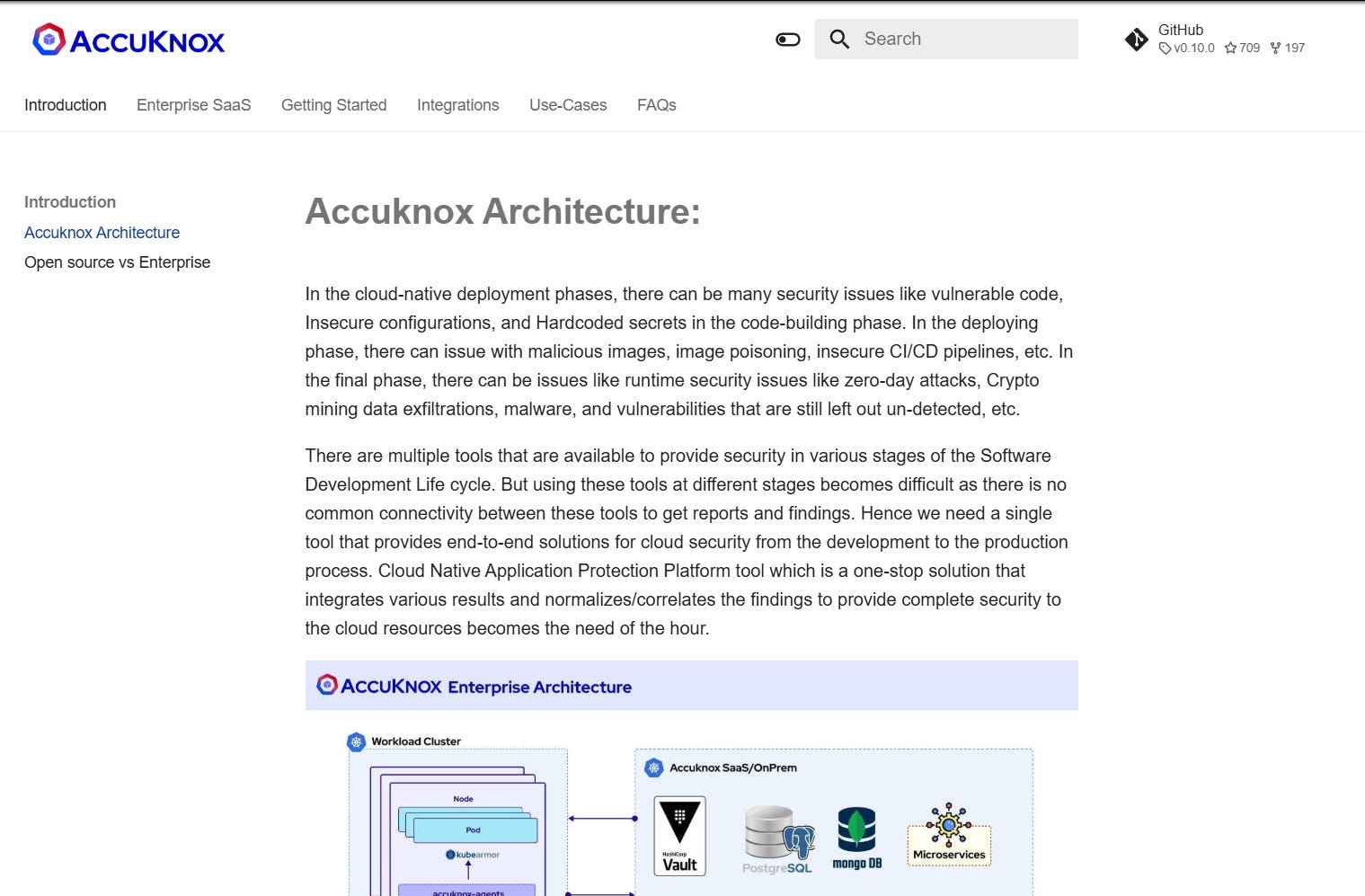
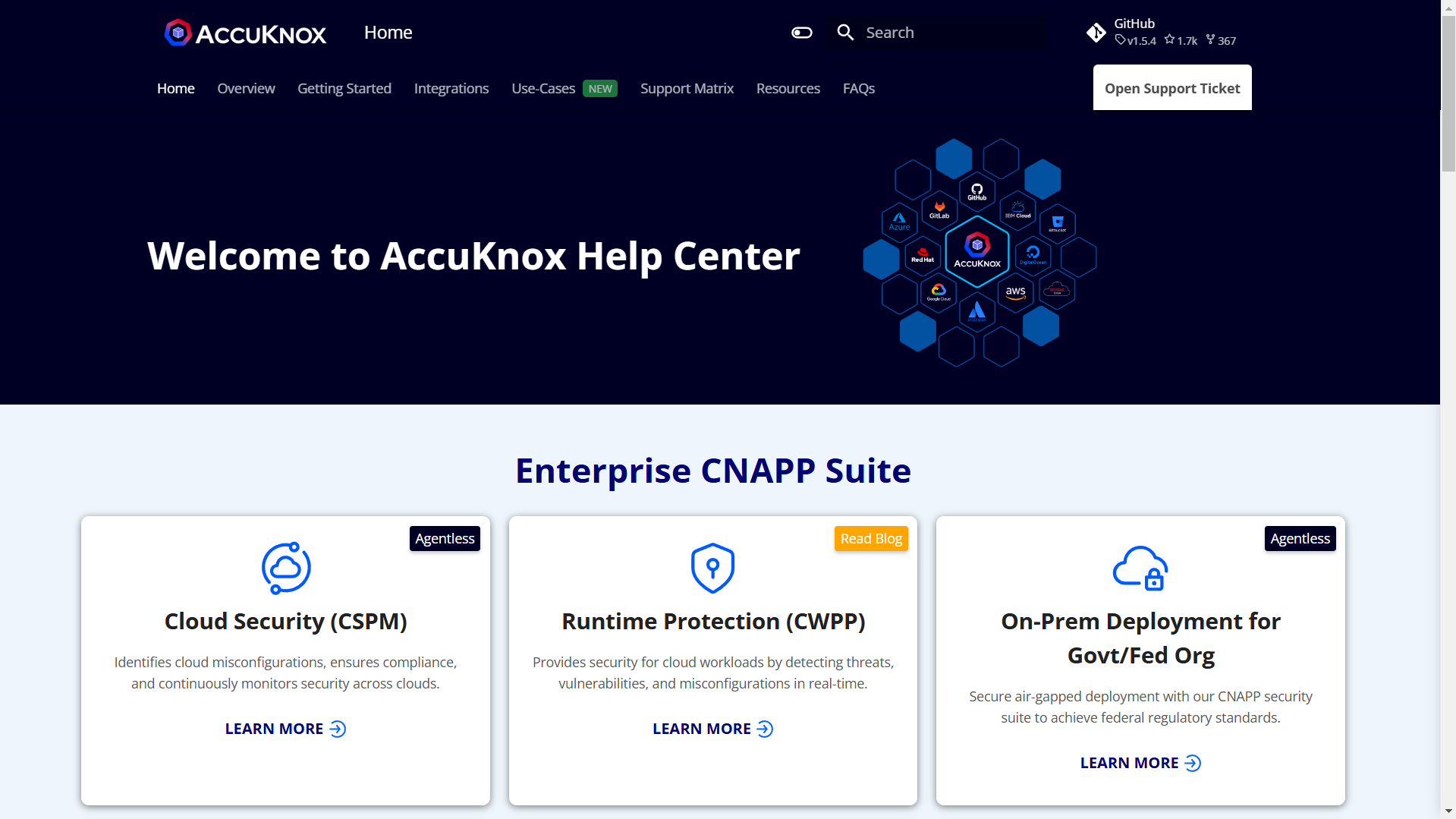
The implementation process was technically demanding. I established a documentation repository with clear contribution guidelines, templates, and examples. This infrastructure enabled engineers to contribute directly to documentation through familiar Git workflows—a critical factor for maintaining technical accuracy.
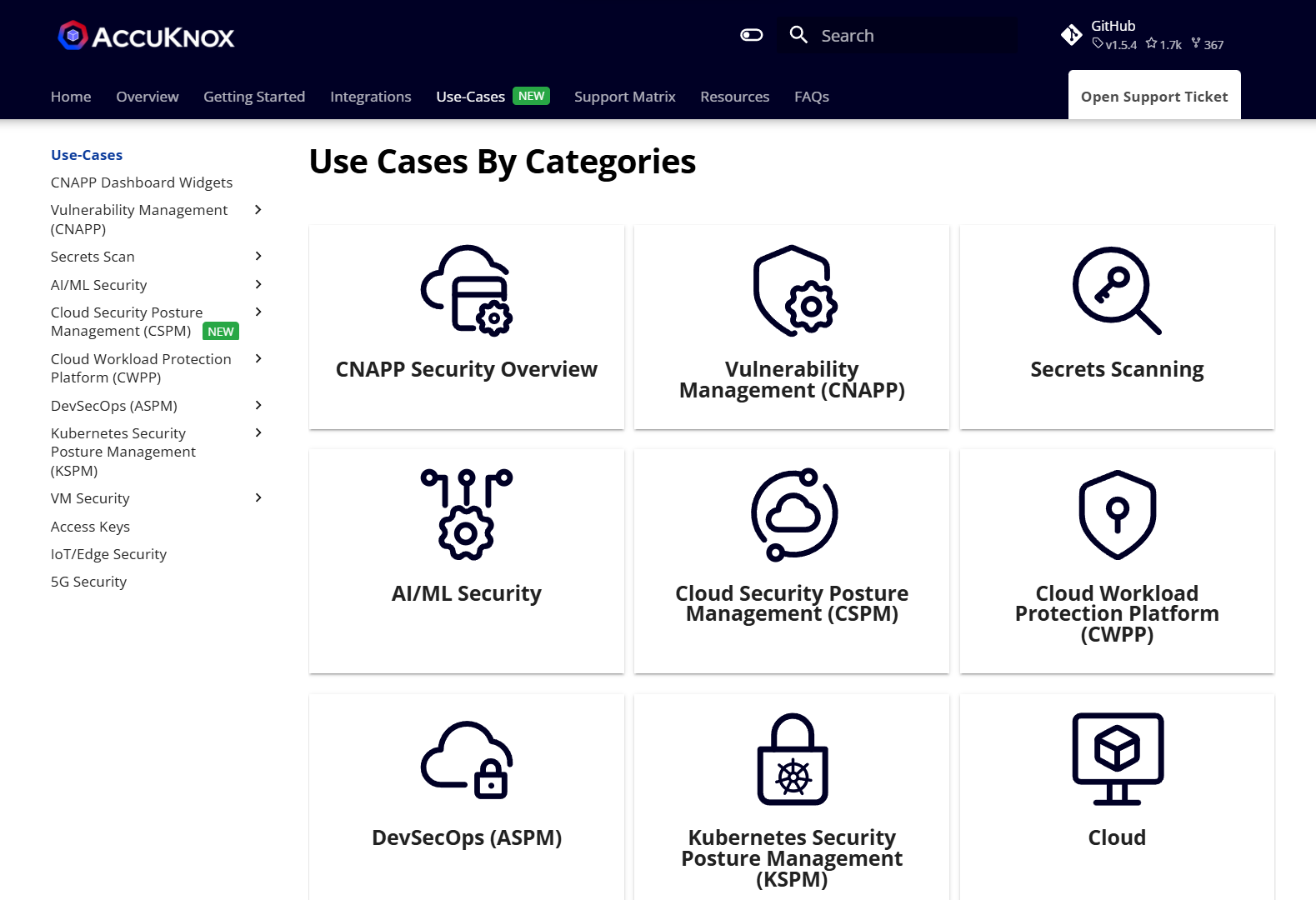
The card-based navigation system I designed represented a significant usability improvement. Rather than forcing users to navigate through hierarchical menus, the card-based approach provided visual pathways aligned with common tasks. This design was informed by user experience principles and heat map analysis of existing documentation interactions.
The technical aspects of the implementation extended beyond content creation. I configured continuous integration pipelines that would automatically build and deploy documentation updates when changes were merged to the main branch. This automation ensured that documentation remained current with minimal manual intervention.
One particularly challenging aspect was implementing proper versioning to support multiple releases of our software. I developed a technical solution that maintained separate documentation branches for major releases while sharing common content across versions. This approach balanced maintenance efficiency with the need to provide version-specific guidance.
Metrics of Success and Lessons Learned
The documentation transformation yielded measurable results. Within months of launching the new help center:
The average time spent on documentation pages increased by 180%, indicating greater engagement with content
The bounce rate decreased by 45%, suggesting users were finding relevant information
Support tickets for basic configuration questions decreased by 37%, demonstrating improved self-service capabilities
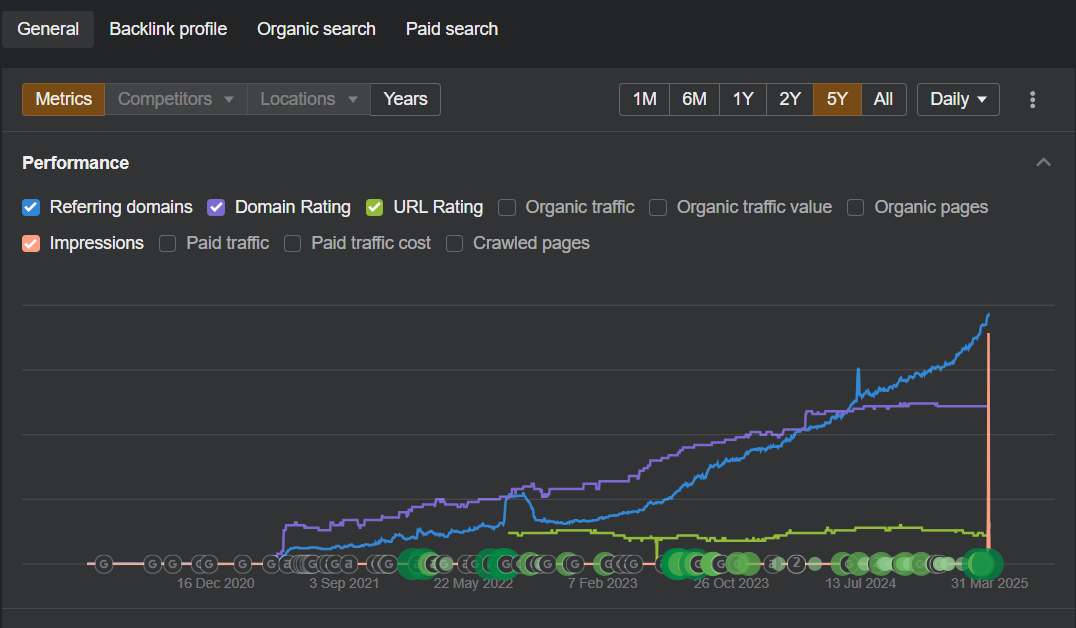
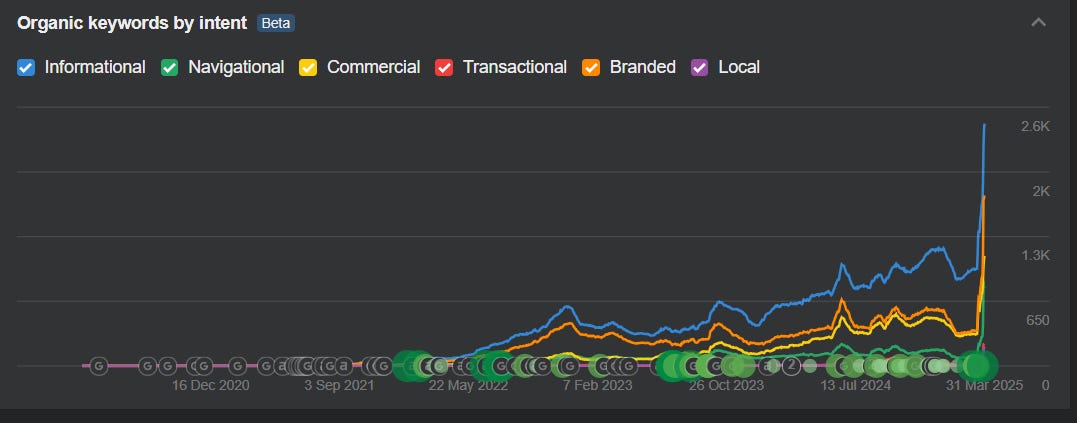
The documentation site's organic search traffic increased by 250%, enhancing our digital footprint
These metrics validated the strategic approach to documentation as both a support resource and a marketing asset. As security teams evaluated AccuKnox, the comprehensive documentation gave them confidence in our technical capabilities and implementation approach.
The project yielded several valuable lessons about technical communication in a specialized domain:
First, I learned that effective documentation requires a deep understanding of user workflows. Generic instructions weren't sufficient—users needed guidance contextually relevant to their specific environments and use cases. This insight led to the development of environment-specific guides for AWS, GCP, Azure, and on-premises deployments.
Second, I discovered the importance of visual communication for complex technical concepts. Working with our design team, I developed architectural diagrams, workflow charts, and decision trees that clarified concepts that were difficult to express in text alone. These visual elements consistently received positive feedback in user surveys.
Third, I recognized that documentation is never truly "complete." As the platform evolved, documentation needed continuous refinement. I established a review cycle where documentation updates were integrated into our sprint planning process, ensuring that new features were documented before release.
The documentation project elevated my visibility within the organization. I emerged as the top contributor to the help documentation repository, as verified by GitHub contribution metrics. More importantly, I had established myself as someone who could translate complex technical concepts into accessible guidance—a skill that would prove increasingly valuable as my responsibilities continued to expand.
By the end of this project, I had transitioned from simply creating content to architecting comprehensive information systems that supported both user success and business objectives. This evolution reflected the broader trajectory of my role at AccuKnox: increasing responsibility, technical depth, and strategic impact.
5. Content Creation as a Voice of Authority
As my role at AccuKnox evolved, content creation remained a core responsibility, but with increasing strategic importance and technical depth. Moving beyond basic blog posts, I developed a comprehensive content strategy that positioned AccuKnox as a thought leader in the cloud-native security space. This transformation reflected my growing understanding of both technical security concepts and effective content marketing principles.
Developing the Editorial Calendar
To systematize our content efforts, I implemented a strategic editorial calendar aligned with both market trends and product development cycles. This approach replaced the previous ad-hoc content creation process with a structured framework that ensured consistent publication cadence and topical relevance.
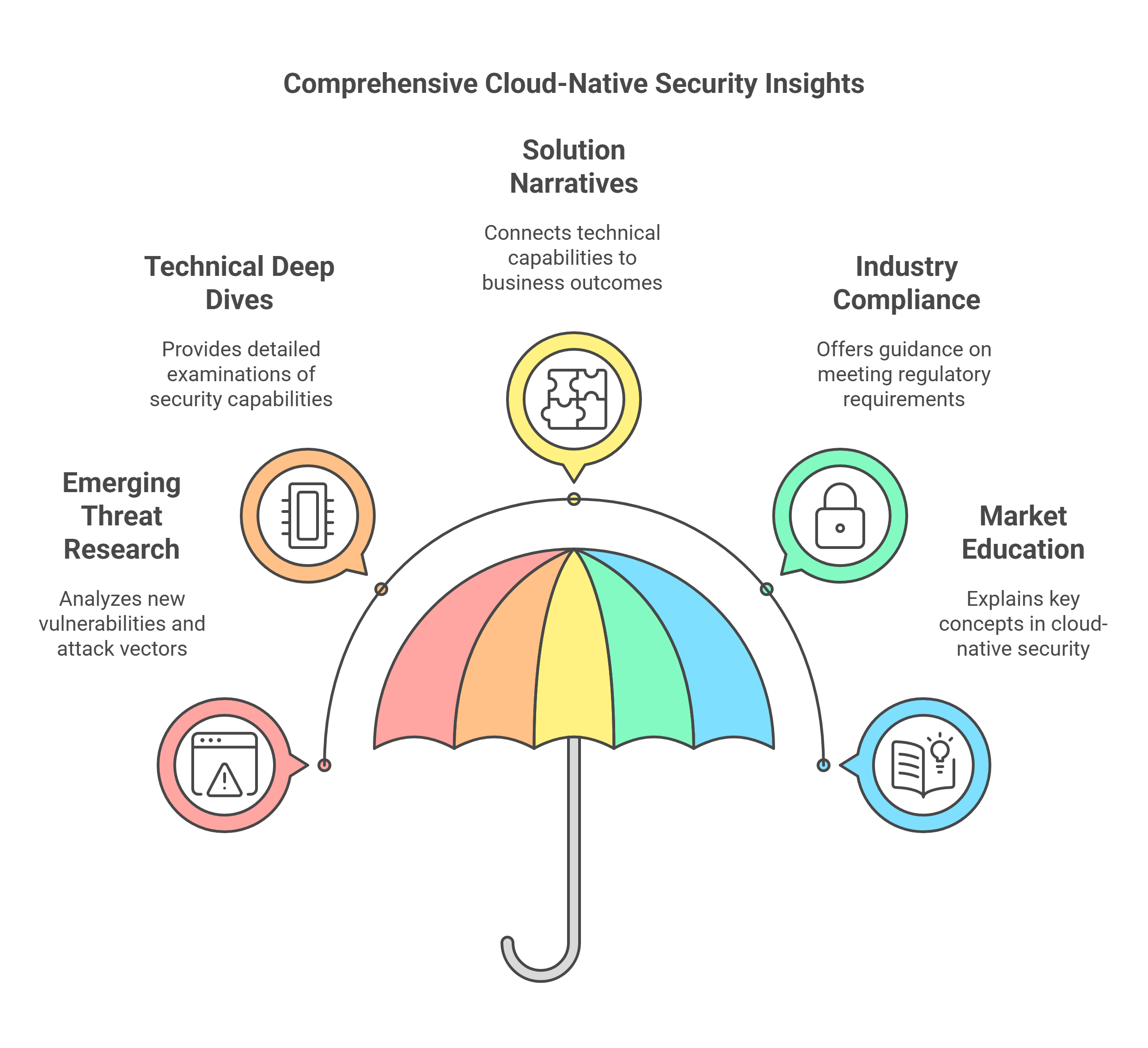
The editorial calendar was built around several key pillars:
Emerging Threat Research: Timely analyses of new vulnerabilities and attack vectors in cloud-native environments, demonstrating our security expertise and vigilance.
Technical Deep Dives: Comprehensive examinations of security capabilities, providing granular technical details that appealed to security engineers and architects.
Solution Narratives: Clear explanations of how AccuKnox addressed specific security challenges, connecting technical capabilities to business outcomes.
Industry Compliance: Guidance on meeting regulatory requirements in cloud-native environments, targeting security governance professionals.
Market Education: Foundational content explaining key concepts in cloud-native security, supporting prospects' understanding of the problem space.
Each quarter, I conducted a thorough analysis of security trends, competitor content, and search analytics to identify content gaps and opportunities. This data-driven approach ensured our content addressed genuine market needs rather than internal priorities alone.
The implementation required significant cross-functional coordination. I established a content review board comprising product management, engineering, and marketing stakeholders to validate topic selection and technical accuracy. This governance structure balanced technical precision with marketing effectiveness, ensuring our content would resonate with sophisticated security audiences.
Technical Blogging Strategy and Implementation
Technical blogging became a cornerstone of our content strategy, with each post designed to demonstrate both our technical expertise and our understanding of customer challenges. Over two years, I authored 48 substantive blogs covering diverse topics from container escape vulnerabilities to compliance automation in Kubernetes environments.
The technical blogging process evolved into a refined methodology:
Topic Selection: Identifying subjects that balance technical relevance, search potential, and strategic alignment with our solutions.
Technical Research: Conducting deep research into each topic, including academic papers, security advisories, and product documentation.
Expert Interviews: Collaborating with internal subject matter experts to ensure technical accuracy and incorporate practical insights.
Technical Validation: Implementing proof-of-concept environments to verify technical assertions and capture authentic implementation details.
Strategic Messaging: Crafting narratives that connect technical concepts to broader security and business implications.
SEO Optimization: Implementing technical SEO best practices to maximize discoverability while maintaining content integrity.
This methodology produced substantive technical content that significantly outperformed industry standards. Our technical blogs achieved an average time-on-page of over four minutes—nearly double the industry average—indicating high engagement from technical audiences.
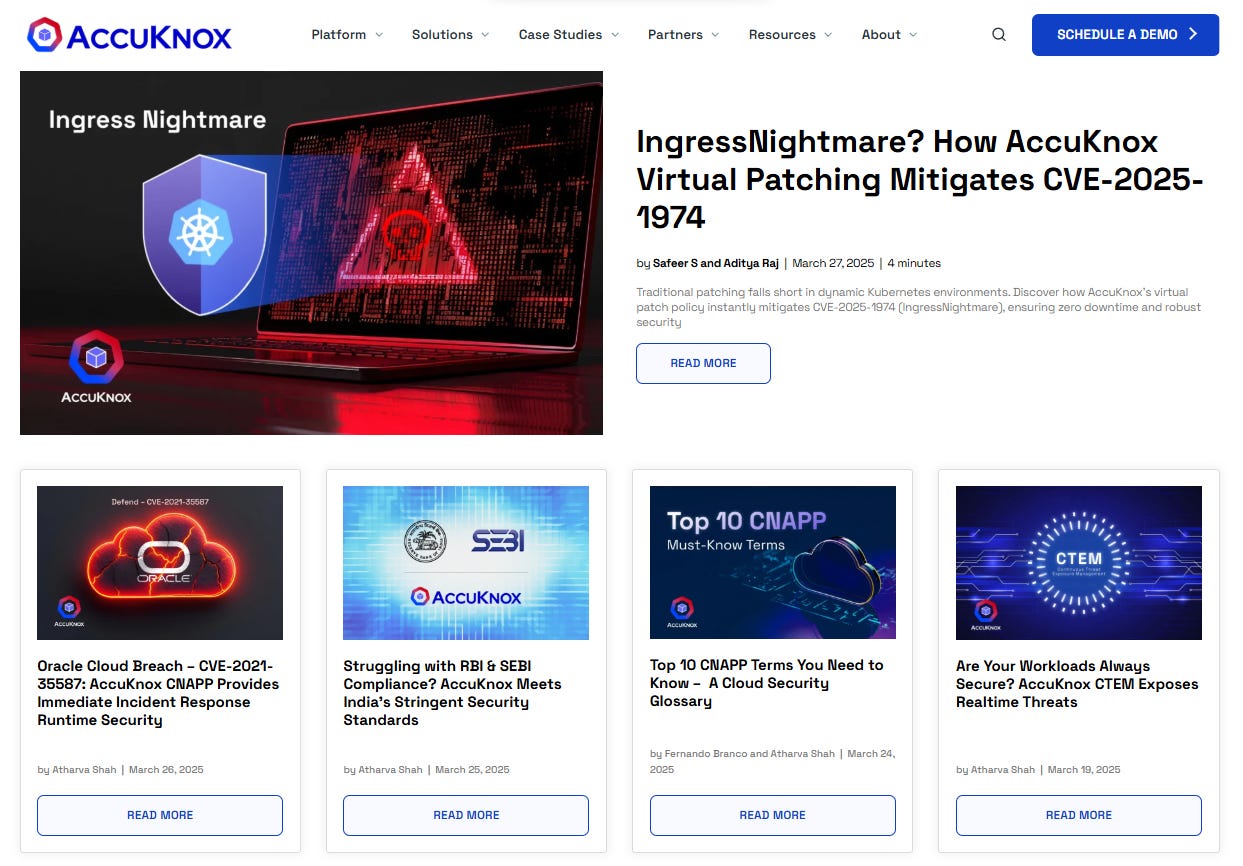
My approach to technical blogging emphasized practical value. Rather than producing purely theoretical content, I incorporated actionable implementation guidance, code examples, and architectural patterns. This practicality resonated with our audience of practitioners who were facing real-world security challenges.
Creating High-Value Assets (eBooks, Whitepapers, and Datasheets)
Beyond blog content, I developed comprehensive assets that addressed complex security topics in depth. These high-value resources required extensive technical knowledge and strategic insight:
eBooks (10 completed): These substantial resources provided comprehensive guidance on significant security domains. For example, the "Complete Guide to Kubernetes Security" spanned 40 pages and covered everything from cluster configuration to runtime protection. Each eBook required weeks of research, technical validation, and iterative refinement.
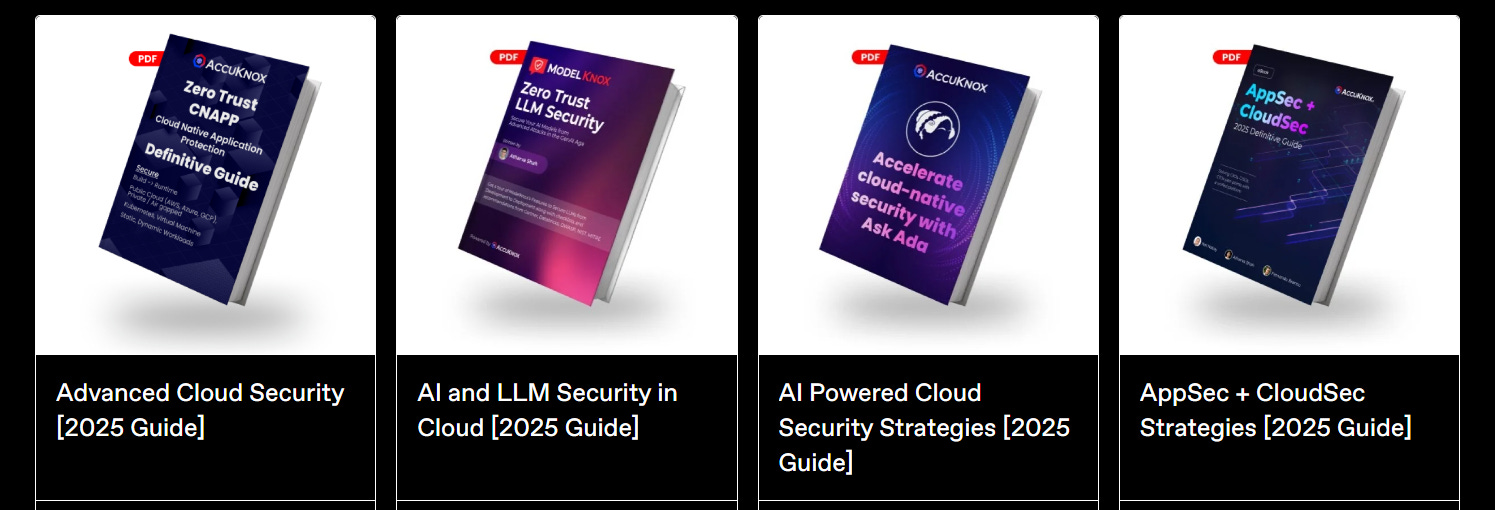
Whitepapers (6+ completed): These documents explored specialized topics with academic rigor. The whitepaper on "Zero Trust Implementation in Multi-Cloud Environments" included technical architecture diagrams, implementation sequences, and risk mitigation strategies. These papers established AccuKnox as a credible authority in specialized domains.
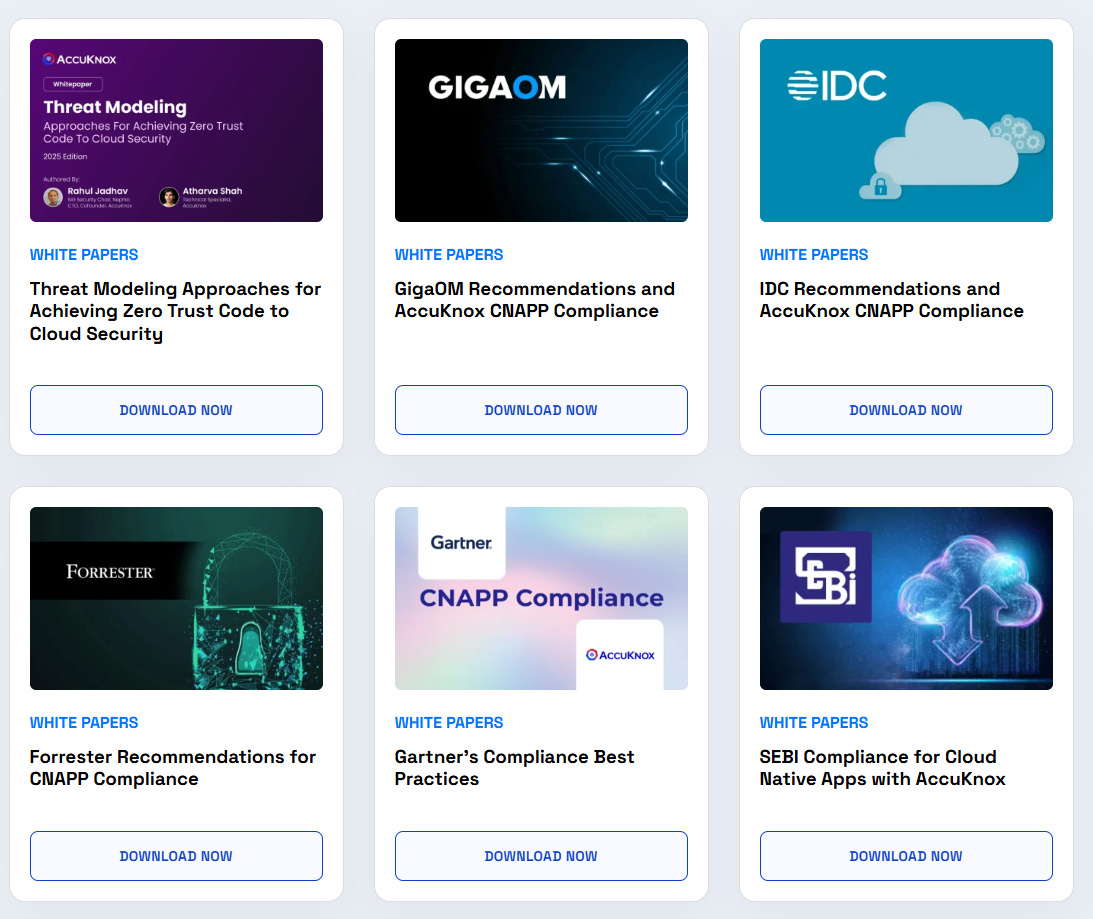
Datasheets (Multiple): These concise technical documents detail specific product capabilities, integration points, and performance characteristics. The challenge was balancing technical comprehensiveness with clarity, providing sufficient detail for technical evaluation without overwhelming readers.
The development process for these assets was exhaustive. For each major project, I:
Created detailed outlines based on technical research and competitive analysis
Conducted multiple interviews with subject matter experts
Developed initial drafts with careful attention to technical accuracy
Coordinated review cycles with engineering, product, and marketing teams
Collaborated with design teams on visualizations and layout
Implemented feedback through multiple revision cycles
Finalized assets for publication and promotion
This rigorous process ensured that our high-value assets met the exacting standards of our technical audience. The investment paid off: these resources consistently generated qualified leads and accelerated prospect education. Several customers later cited specific whitepapers as influential in their decision to evaluate AccuKnox.
The creation of these assets deepened my technical expertise across multiple security domains. I developed a nuanced understanding of topics like runtime threat detection, network policy enforcement, and compliance automation—knowledge that proved valuable beyond content creation as I participated in product strategy discussions and customer interactions.
By the end of two years, I had built a comprehensive content portfolio that spanned the entire buyer journey—from initial problem awareness to technical evaluation. This body of work not only supported marketing objectives but also established AccuKnox as a credible voice in cloud-native security, with content that security professionals genuinely valued for its technical insight and practical utility.
6. Architecting the Digital Presence
Building and optimizing AccuKnox's digital presence became a significant area of responsibility that expanded my technical skills beyond content creation. Over two years, I developed and maintained over 70 landing pages, implemented technical SEO strategies, and established the infrastructure for effective digital engagement. This work required balancing marketing objectives with technical considerations to create a cohesive online experience.
Landing Page Strategy and Implementation
The development of AccuKnox's landing pages required a strategic approach that aligned with both user needs and business objectives. I implemented a hierarchical structure that guided visitors from high-level solution overviews to specific technical capabilities:
Platform Pages: Comprehensive overviews of the AccuKnox CNAPP platform, articulating our unified approach to cloud-native security.
Solution Pages: Targeted pages addressing specific security challenges like Kubernetes security, compliance automation, and supply chain protection.
Feature Pages: Detailed explanations of technical capabilities such as runtime protection, network policy enforcement, and vulnerability management.
Integration Pages: Documentation of our integration with major cloud providers, security tools, and development environments.
Each page type followed a consistent structure optimized for both user comprehension and conversion. The architecture included clear value propositions, technical specifications, implementation details, and appropriate calls to action.
The technical implementation was equally methodical. Working with WordPress, I developed custom page templates that balanced design aesthetics with performance optimization. This required understanding of HTML/CSS, responsive design principles, and website performance factors.
Some of the most successful implementations included:
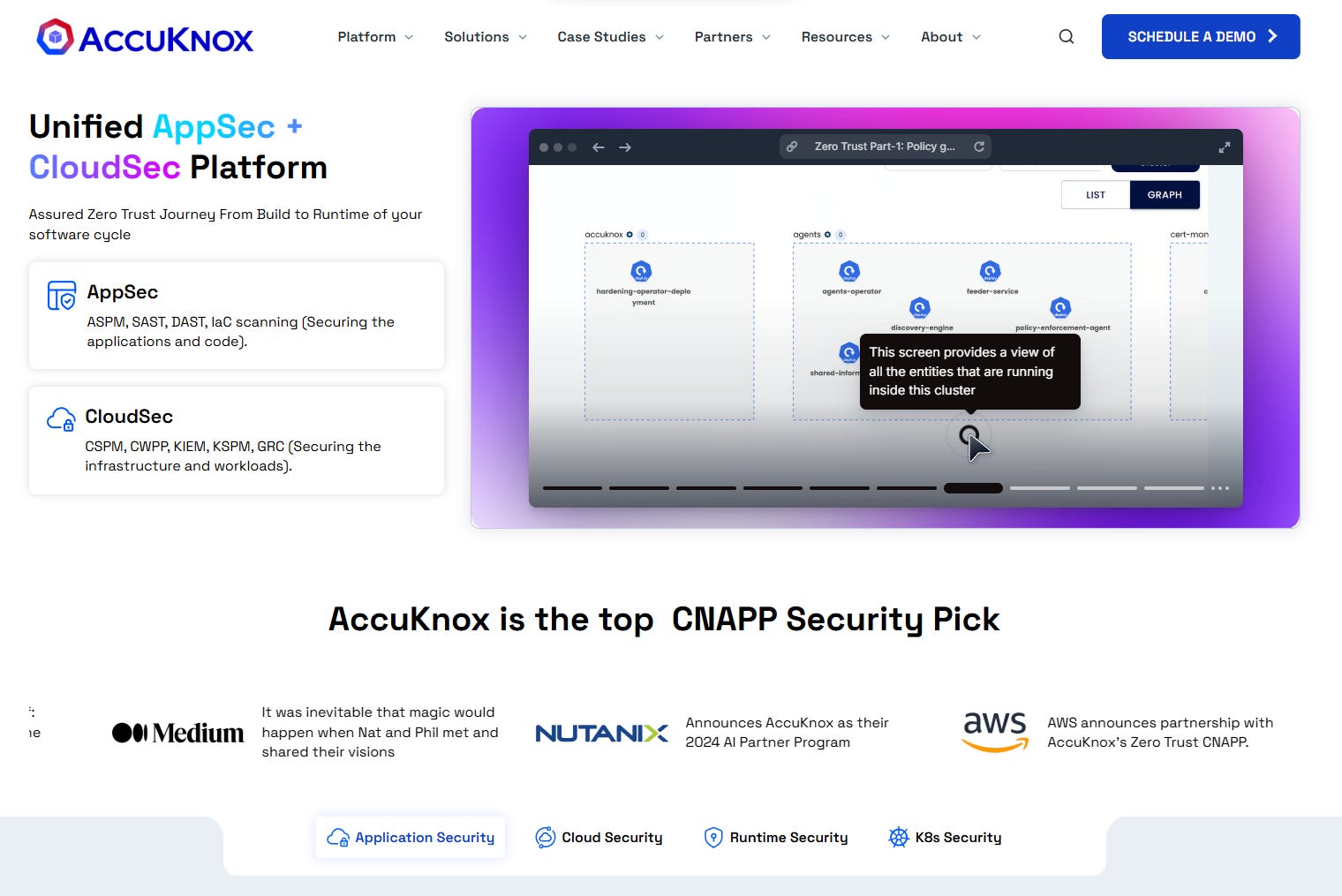
The CNAPP Platform Page (accuknox.com/platform/cnapp): A comprehensive explanation of our platform approach, featuring interactive elements that demonstrate the integration of different security capabilities.
The Kubernetes Security Page (accuknox.com/solutions): A technical overview of Kubernetes-specific security challenges and our approach to addressing them, with embedded architectural diagrams and implementation guidance.
The Compliance & Governance Section (accuknox.com/platform): A detailed explanation of our automated compliance capabilities, including supported frameworks and implementation methodologies.
These pages became critical assets in our digital strategy, serving as both educational resources and conversion points. The analytics showed that visitors who engaged with these detailed pages were significantly more likely to request product demonstrations or technical discussions.
User Experience Considerations
Developing effective landing pages required a deep understanding of our users' technical backgrounds and information needs. Security professionals and technical decision-makers had specific expectations for both content depth and user experience.
User testing revealed that technical audiences particularly valued transparent technical information. In response, I ensured our pages included specific details about implementation approaches, technical limitations, and performance considerations—information that competitive solutions often obscured but that built credibility with security engineers and architects.
A particularly successful implementation was our "Solution Comparison" page, which provided detailed technical comparisons between AccuKnox and alternative approaches to cloud-native security. Rather than relying on marketing claims, the page presented objective capability comparisons with technical substantiation. This transparent approach resonated strongly with technical evaluators.
Performance Optimization and Technical Infrastructure
Beyond content and design, I took responsibility for the technical performance of our digital assets. This expanded my technical skills into areas like web performance optimization, analytics implementation, and technical SEO.
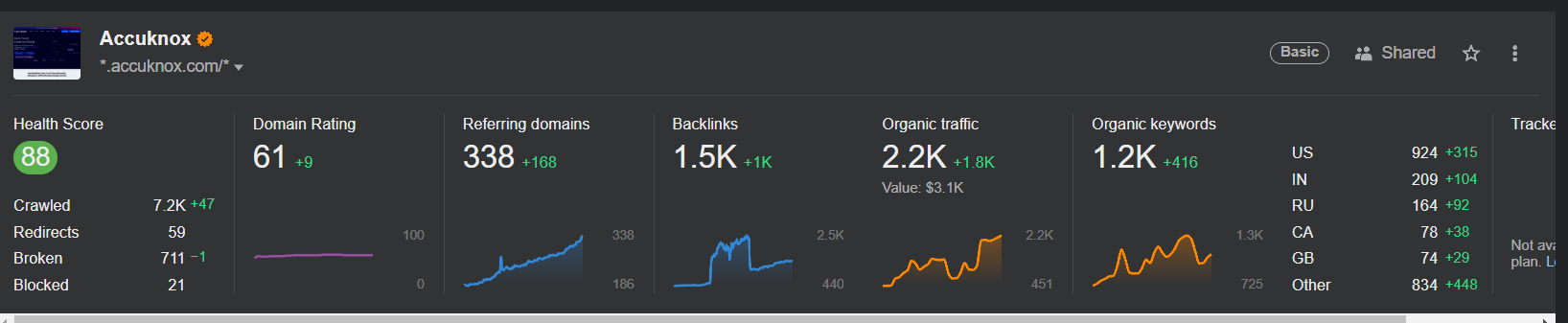
Performance optimization became a particular focus after analytics revealed that page load times were impacting user engagement. I implemented several technical improvements:
Image Optimization: Implementing WebP format and responsive image loading to reduce bandwidth requirements without compromising visual quality.
Code Minification: Streamlining CSS and JavaScript assets to reduce file sizes and parsing time.
Lazy Loading: Implementing progressive resource loading to prioritize above-the-fold content and defer non-critical elements.
Caching Configuration: Optimizing browser and server caching to improve the return visitor experience.
Content Delivery Network: Implementing a CDN to reduce latency for global visitors and improve overall performance.
These technical optimizations yielded measurable results, reducing average page load times by 42% and improving mobile performance scores from 68 to 91 on Google's PageSpeed Insights.
I also took responsibility for server management and uptime monitoring, collaborating with our engineering team to implement backup procedures and failover policies. This expanded my technical knowledge into server configuration, monitoring tools, and disaster recovery planning—skills not typically associated with content roles but valuable in a startup environment where responsibilities often transcended conventional boundaries.
The technical infrastructure work extended to analytics implementation. I deployed comprehensive tracking mechanisms across our digital properties, configuring event tracking for key user interactions and establishing dashboards that provided actionable insights. This infrastructure enabled data-driven decision-making about content priorities and user experience enhancements.
By the end of two years, I had transformed AccuKnox's digital presence from a basic website into a comprehensive technical resource optimized for both user experience and business outcomes. This work demonstrated the expanded scope of my role, combining content expertise with technical implementation skills to create a digital experience that authentically represented our technical capabilities and supported our market objectives.
7. Technical Marketing in Practice
Beyond content creation and website management, my role expanded to encompass specialized technical marketing functions that required both marketing acumen and deep technical understanding. These responsibilities included marketplace management across cloud providers, analytics implementation for data-driven decision making, and technical support for events and webinars. These diverse functions showcased the multifaceted nature of technical marketing in a cloud security startup.
Marketplace Management Across Cloud Providers
As AccuKnox expanded its go-to-market strategy, cloud marketplaces became critical distribution channels. I took responsibility for managing our presence across major cloud marketplaces—AWS, GCP, Azure, Oracle, Alibaba Cloud, and VMware—a complex technical and operational challenge that extended well beyond traditional marketing functions.
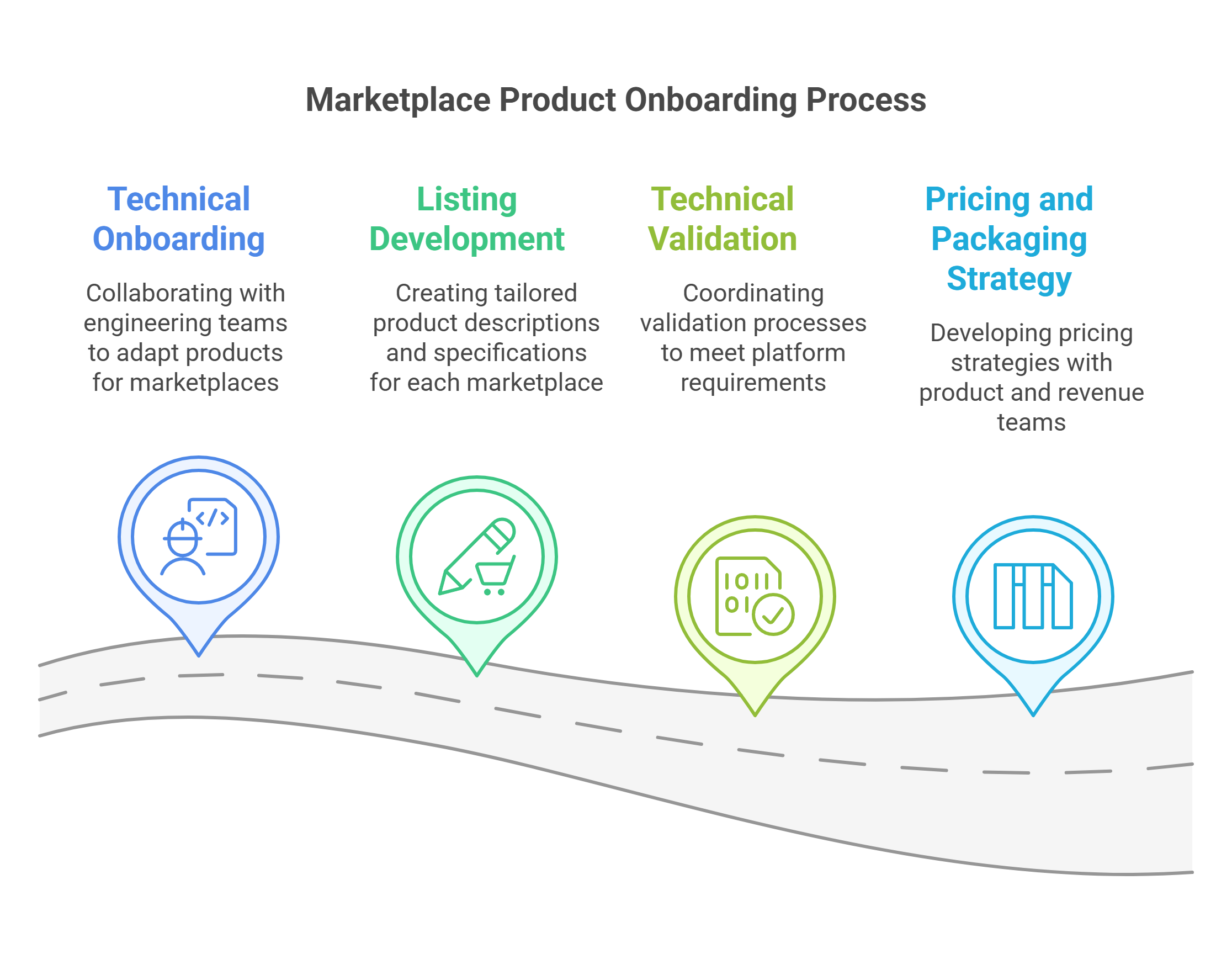
The marketplace management process required several specialized competencies:
Technical Onboarding: Each marketplace required specific technical implementations to list our product. This involved working closely with engineering teams to package our solution appropriately for each environment, configuring deployment templates, and ensuring compatibility with marketplace-specific requirements.
Listing Development: I created marketplace-specific product descriptions, technical specifications, and usage guidance optimized for each platform's unique audience and format requirements. This required understanding the technical expectations and procurement patterns of users on each marketplace.
Technical Validation: Before listings could go live, each marketplace required technical validation of our solution. I coordinated these validation processes, addressing technical feedback and ensuring our product met each platform's operational requirements.
Pricing and Packaging Strategy: I worked with product and revenue teams to develop appropriate pricing and packaging structures for marketplace deployments, considering technical consumption models, marketplace fee structures, and competitive positioning.
The process was technically demanding. For the AWS Marketplace, for example, I helped configure AMI (Amazon Machine Image) deployments and CloudFormation templates that would enable one-click deployment of our solution. For GCP, I worked with engineering to implement appropriate container configurations and deployment scripts.
The most challenging aspect was ensuring consistent product functionality across diverse cloud environments while accommodating platform-specific constraints. This required a deep understanding of both our product architecture and the technical characteristics of each cloud platform.
Beyond basic listings, I implemented lead management systems for marketplace inquiries, configuring integration between marketplace consoles and our CRM. This technical implementation ensured timely follow-up on marketplace interest and proper attribution of marketplace-sourced revenue.
Analytics Implementation and Decision Making
To support data-driven marketing decisions, I developed d comprehensive analytics infrastructure spanning our digital properties. This technical implementation went far beyond basic traffic measurement to provide actionable insights into user behavior and content performance.
The analytics framework included:
Multi-Platform Tracking: I implemented integrated tracking across our website, help documentation, event pages, and digital assets using Google Analytics, Tag Manager, and custom event tracking.
Custom Dashboard Development: I created specialized dashboards in Looker Studio that visualized key performance metrics, user journeys, and conversion patterns. The primary dashboard (lookerstudio.google.com/u/0/reporting/aff990c2-a9dd-4f5f-b625-f3d33fc509f3/page/p_anih6h50jd) became a central resource for marketing planning.
Funnel Analysis: I configured conversion tracking to map user journeys from initial content interaction to product evaluation requests, identifying both successful paths and abandonment points.
Attribution Modeling: I implemented multi-touch attribution tracking to understand the contribution of different content assets and channels to conversion outcomes.
Content Performance Metrics: I developed specialized tracking for content engagement, including scroll depth, time-on-page, and content-specific events that indicated meaningful interaction.
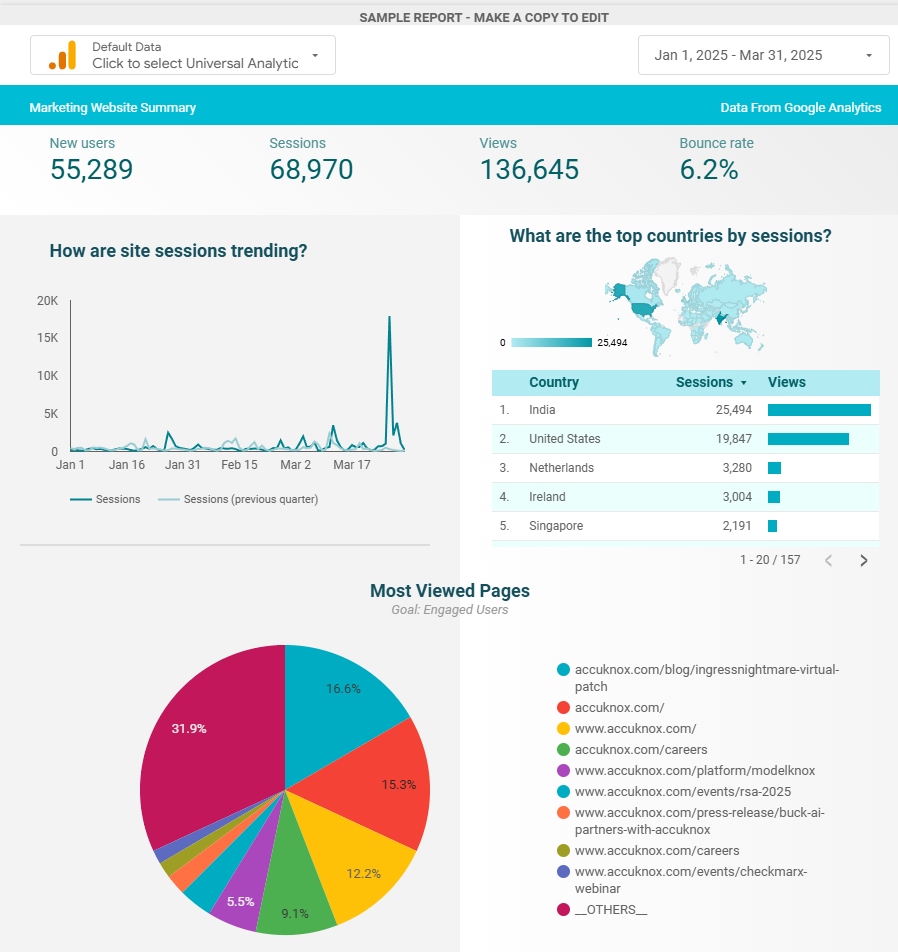
The technical implementation required an understanding of JavaScript tracking code, API integrations, and data visualization principles. I wrote custom tracking scripts for specialized interactions and configured complex event sequences to capture meaningful user journeys.
The analytics infrastructure provided invaluable insights that informed content strategy. For example, analysis revealed that technical blog posts on Kubernetes security consistently outperformed other topics in both traffic and conversion metrics, leading us to expand our content in this domain. Similarly, tracking showed that users who accessed help documentation during evaluation were significantly more likely to proceed to product trials, highlighting the sales enablement value of technical documentation.
The data also guided technical optimizations. Heat map analysis of landing pages identified user attention patterns that informed design refinements. Funnel analysis exposed form abandonment issues that were subsequently addressed through UI improvements. These data-driven refinements continuously improved our digital performance.
Event Support and Webinar Infrastructure
Technical events and webinars became important channels for demonstrating AccuKnox's capabilities and engaging with the security community. I provided specialized technical support for these activities, extending beyond basic marketing functions to ensure successful technical presentations.
For major industry events like KubeCon and the RSA Conference, I developed:
Technical Demonstrations: Creating scripted demonstrations of key product capabilities, including both prepared scenarios and flexible demonstrations that could address spontaneous audience questions.
Technical Collateral: Developing event-specific materials that combined marketing messaging with technical depth appropriate for event audiences.
Booth Technology: Configuring demo environments, interactive displays, and technical presentations that effectively showcased our capabilities within the constraints of event settings.
For webinars, my responsibilities expanded to include technical production:
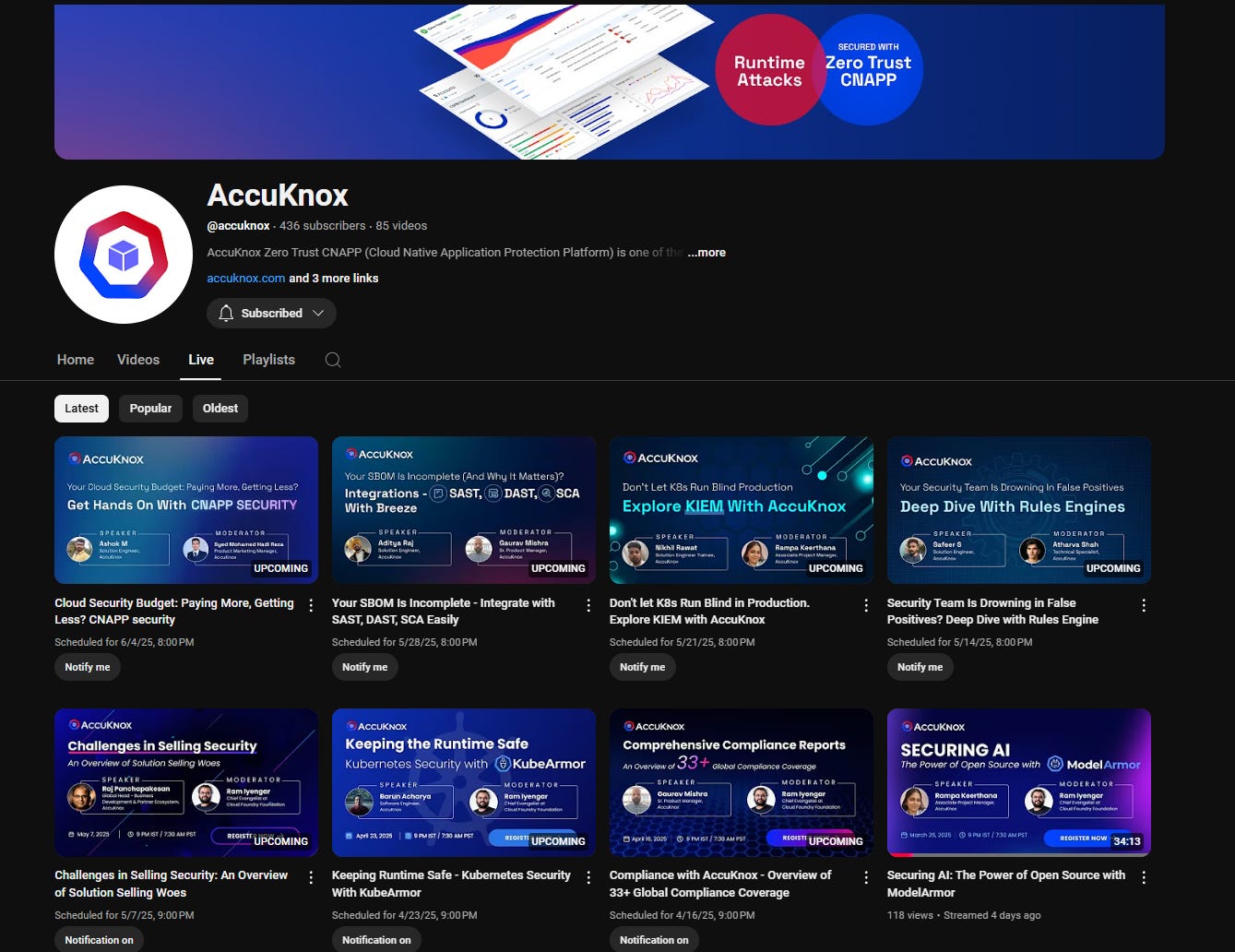
Platform Configuration: Setting up and testing webinar platforms (primarily Restream) to ensure reliable delivery across multiple channels (YouTube, LinkedIn, Facebook).
Technical Content Development: Creating presentation materials that balanced marketing messaging with substantive technical content, ensuring webinars delivered genuine value rather than mere promotion.
Interactive Elements: Implementing polls, Q&A systems, and demonstration environments that encouraged audience engagement and addressed technical questions effectively.
Recording and Distribution: Configuring recording settings, post-processing content, and establishing distribution workflows for maximizing the long-term value of webinar content.
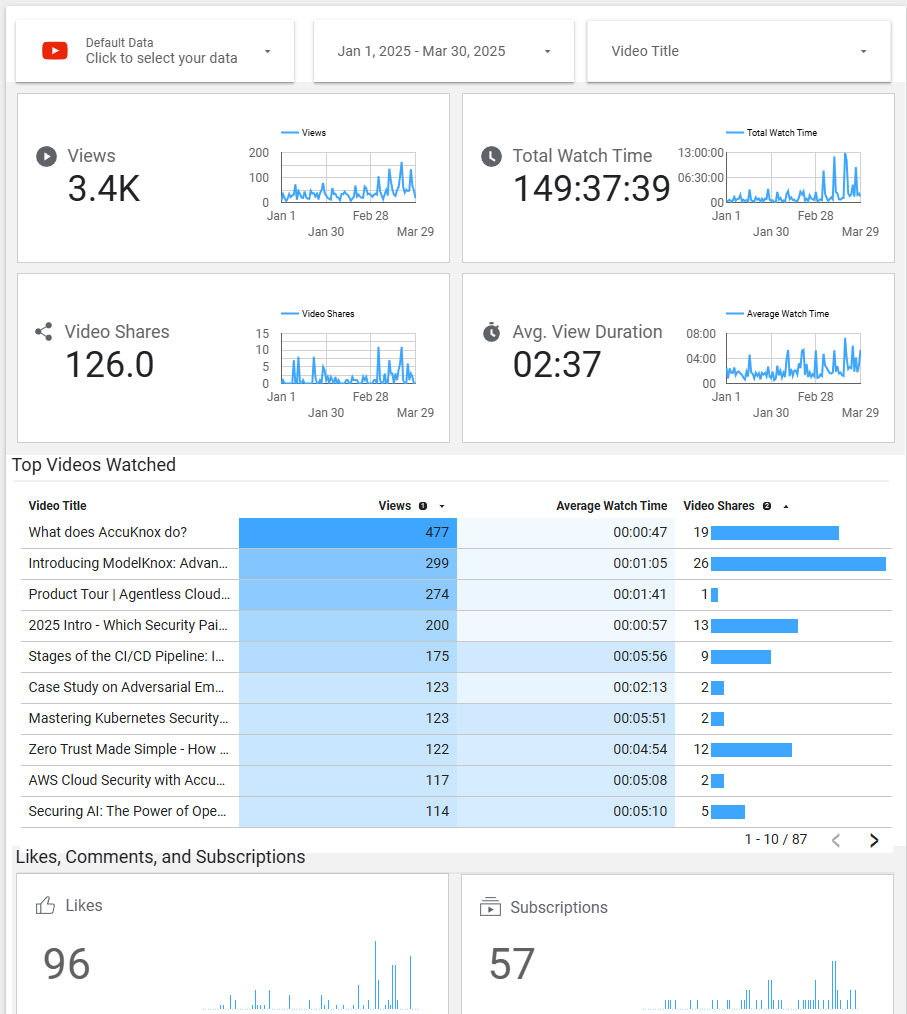
The technical aspects of webinar production were particularly challenging. I learned to troubleshoot audio/video issues, manage streaming configuration, and ensure consistent delivery across diverse viewer environments. This required understanding of video encoding, streaming protocols, and audience connectivity considerations.
Through these diverse technical marketing activities, I developed specialized expertise that transcended traditional marketing boundaries. The combination of marketing strategy, technical implementation, and data analysis created a multidimensional role that directly contributed to AccuKnox's market presence and customer acquisition objectives.
8. Tool Mastery and Technical Skills Development
Technology Stack Evolution
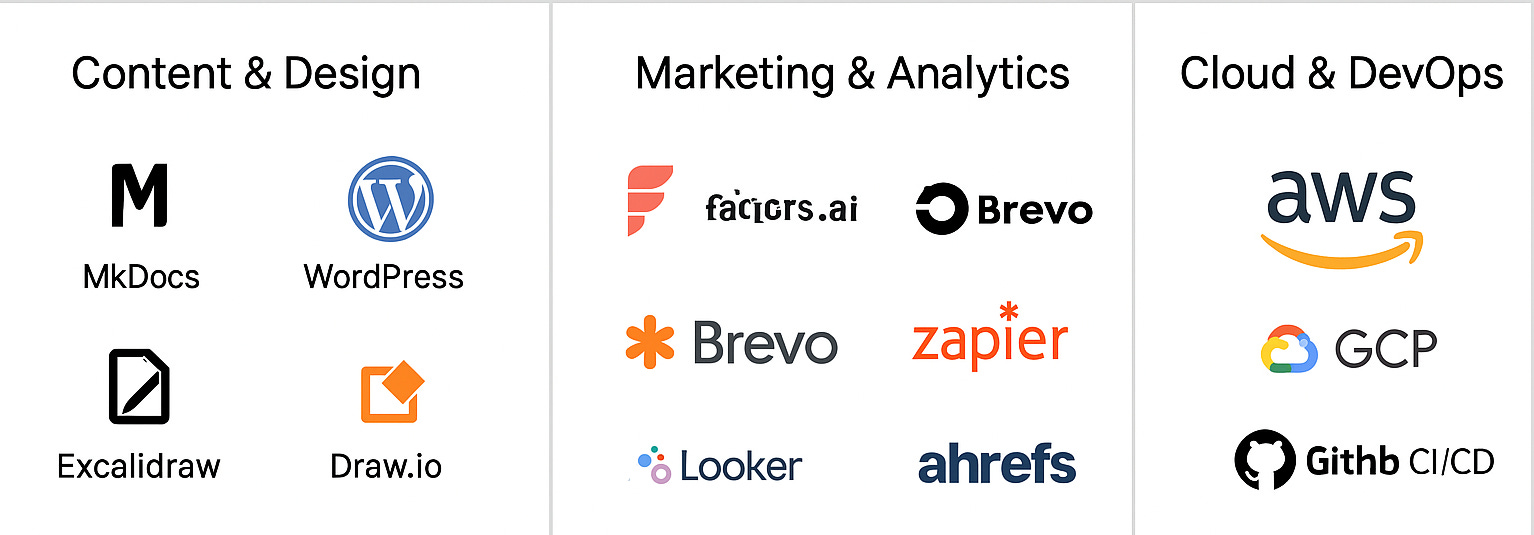
My journey at AccuKnox has been characterized by continuous evolution in leveraging an extensive marketing technology stack. When I first joined, our toolkit was limited, but over time, we systematically expanded our capabilities to drive efficiency and impact.
The progression from basic content management to sophisticated marketing automation represented a significant learning curve. I recall the pivotal moment when we implemented our first integrated campaign using Brevo and Zapier—what had previously required manual coordination across multiple team members was suddenly streamlined into an automated workflow. This transformation wasn't merely about efficiency; it fundamentally changed how we approached campaign planning.
For instance, our implementation of Factors.ai transformed our approach to website visitor intelligence. Before this, we relied on rudimentary analytics that provided generic insights. The ability to predict visitor companies and segment audiences with precision created a paradigm shift in how we personalized content and prioritized lead follow-up. This capability became especially valuable in Q3 2023 when cloud security budgets tightened across the industry, forcing us to maximize conversion rates from existing traffic.
The journey with interactive product demos through Arcade and Storylane serves as another instructive example. When the 2023 Cloud Native Security Survey revealed that 78% of decision-makers wanted to experience product capabilities before engaging with sales teams, we recognized an opportunity. Implementing these platforms required not just technical configuration but a fundamental rethinking of our product storytelling approach. The resulting demos increased qualified lead conversion by 27% within the first quarter of implementation.
Cloud Platform and Security Tool Expertise
My technical skills development extended well beyond traditional marketing tools into the core cloud platforms and security technologies that define our industry. This dual expertise has proven invaluable in translating complex technical concepts into compelling marketing narratives.
Working with GCP Marketplace, AWS Marketplace, and Azure Marketplace required understanding the technical underpinnings of cloud environments. I developed fluency not just in the marketplace mechanics but in the architectural considerations that drive customer decisions. This knowledge proved crucial during our multi-cloud offering expansion in late 2023, when I needed to articulate our differentiated approach across platforms.
The security domain presented an even steeper learning curve. Mastering YAML policy configuration for Zero Trust implementations moved me beyond marketing terminology into practical application. I vividly remember spending a weekend working through the CNCF's Security Technical Advisory Group documentation to better understand the nuances of container security—knowledge that directly enhanced the technical accuracy of our content.
My experience with security testing tools like KubeGoat and KubeEscape proved particularly valuable during the Log4j vulnerability crisis. When this critical vulnerability surfaced, our team needed to rapidly develop educational content explaining the implications for Kubernetes environments. Having hands-on experience with these tools allowed me to create technically accurate diagrams and explanations within 24 hours, positioning AccuKnox as a thought leader during this industry challenge.
The emerging field of AI security presented yet another frontier. As Large Language Models gained prominence throughout 2023, I dedicated time to understanding the unique security challenges they present. This investment paid dividends when we launched our ModelKnox offering, as I could articulate the technical risks of LLM poisoning and explain our mitigation strategies with credibility.
Automation and Efficiency Improvements
Automation became a central theme in my technical skills development, reflecting both personal growth and organizational necessity. As our marketing initiatives expanded, manual processes quickly became unsustainable, creating an imperative for automation.
Python emerged as my primary automation tool, with applications ranging from data transformation to asset generation. One particularly impactful project involved addressing our Excel sheet management challenge. With multiple stakeholders contributing to campaign tracking spreadsheets, data inconsistency had become a persistent issue. I developed an automated system that standardized inputs, calculated key metrics, and generated executive summaries without manual intervention. This not only saved approximately 12 hours weekly but also improved data integrity across reporting.
Web performance automation represented another valuable initiative. Recognizing the impact of site speed on both user experience and SEO, I implemented automated performance monitoring using Lighthouse CI. This system not only identified performance degradation immediately but also initiated alerts to the development team when specific thresholds were crossed. The result was a 32% improvement in our core web vitals over six months.
The cumulative impact of these automation initiatives extended beyond efficiency gains. By reducing mundane tasks, I created space for strategic thinking and creative work. As our CEO often noted, "Automation isn't about doing more with less; it's about creating work capacity that matters." This philosophy guided my approach to technical skills development throughout my AccuKnox journey.
9. The AccuKnox Culture & What Sets It Apart
Leadership Philosophy and Team Dynamics
The AccuKnox culture distinguishes itself through a leadership philosophy that balances strategic vision with tactical execution. Having experienced both corporate bureaucracy and chaotic startup environments previously, I found AccuKnox's approach refreshingly effective.
Our CEO, Nat Natraj, embodies what management theorist Adam Grant calls a "giver" leadership style. His accessibility transcends typical hierarchical boundaries, creating an environment where ideas flow based on merit rather than organizational rank. I recall presenting a radical redesign concept for our documentation system during my third month—instead of dismissal, I received thoughtful engagement and ultimately, approval to proceed. This experience highlighted the genuine meritocracy that defines the AccuKnox culture.
The leadership team's commitment to transparency manifests through open board meetings and financial updates that remain rare in the startup ecosystem. When the cybersecurity funding climate shifted dramatically in late 2023, our leadership shared the implications candidly, engaging the entire team in strategic pivots rather than insulating them from market realities. This approach fostered a collective ownership mindset that proved crucial during challenging quarters.
Team dynamics at AccuKnox reflect what organizational psychologist Amy Edmondson terms "psychological safety"—the shared belief that interpersonal risk-taking is encouraged. Cross-functional collaboration flourishes in this environment, with engineering, product, and marketing teams operating as partners rather than siloed entities. This collaborative ethos proved particularly valuable during our CNAPP platform launch, where tight integration between technical capabilities and market messaging was essential.
The team's diversity extends beyond demographics to cognitive approaches and professional backgrounds. Our weekly syncs feature perspectives from former CISO practitioners, academic researchers, and commercial software veterans, creating a rich intellectual environment rarely found in early-stage companies. This cognitive diversity has prevented the groupthink that often plagues security startups, allowing us to anticipate market needs rather than merely reacting to them.
Learning Opportunities and Skills Development
AccuKnox distinguishes itself through an uncommonly robust commitment to professional development. While many startups pay lip service to learning, AccuKnox operationalizes this commitment through concrete investments and structural support.
The company's partnership with KodeKloud exemplifies this approach, providing unlimited access to technical training that typically remains exclusive to engineering teams. This resource enabled my journey from basic container knowledge to advanced Kubernetes security concepts, directly enhancing the technical accuracy of our marketing materials. The return on this investment became evident when our technical content began attracting the attention of security practitioners who typically dismiss vendor publications.
Beyond formal training, AccuKnox's "Network and Learn" sessions create regular knowledge transfer opportunities. These weekly gatherings alternate between external expert presentations and internal deep dives, creating a cadence of continuous learning.
Learning at AccuKnox extends beyond technical domains into communication and leadership development. Our CEO's emphasis on clear writing has catalyzed notable improvement across the organization. His practice of sharing annotated examples of both exceptional and problematic communication creates concrete learning opportunities that transcend generic advice. This focus has influenced my writing style, particularly in distilling complex technical concepts into accessible explanations.
Remote Work in a High-Performance Environment
AccuKnox's fully remote structure offers insights into effective distributed team operations. Rather than viewing remote work as a compromise or temporary necessity, the company has intentionally designed its practices around geographic distribution from inception.
The effectiveness of AccuKnox's remote model stems from deliberate communication practices. Asynchronous documentation serves as the primary information vehicle, with synchronous meetings reserved for genuine collaboration rather than status updates. This approach has cultivated a documentation-centric culture where knowledge persistence is valued over ephemeral conversations. The adoption of detailed pull request templates and comprehensive project briefs exemplifies this commitment to communication clarity.
Digital collaboration tools are deployed with strategic intent rather than accumulated haphazardly. When evaluating new collaboration platforms, the team assesses not just features but integration with existing workflows. This disciplined approach has prevented the tool proliferation that often fragments communication in remote environments. Our standardized stack of GitHub, Slack, and Notion creates a cohesive digital workspace with a clear purpose for each platform.
The company addresses the social dimension of remote work through structured initiatives rather than leaving it to chance. Regular virtual coffee pairings create cross-functional connections, while quarterly off-sites foster deeper team bonding. These investments recognize that social capital underlies effective collaboration, particularly in distributed environments.
Performance management in AccuKnox's remote context emphasizes outcomes over activity. Clear objectives and key results (OKRs) provide directional guidance, while individual autonomy in execution fosters ownership. This balance has proven particularly effective for creative and strategic work, where prescribed approaches often stifle innovation. My experience developing the documentation system exemplifies this dynamic—I received clear objectives regarding user experience improvements, but maintained complete autonomy in implementation approach.
The remote environment has paradoxically strengthened accountability through increased transparency. Work products in AccuKnox are visible by default, creating natural peer review mechanisms that elevate quality standards. This transparency extends to decision-making, with key discussions documented in shared spaces rather than confined to private conversations. The resulting decision clarity has accelerated execution while reducing misalignment.
10. Key Achievements and Contributions
Content Portfolio Growth and Performance
The evolution of AccuKnox's content portfolio over two years reflects both quantitative expansion and qualitative maturation. Starting from minimal digital assets, we methodically built a comprehensive content ecosystem addressing the entire customer journey.
Our blog content strategy exemplifies this progression. The initial 48 blog posts represented more than numerical growth—they established a systematic approach to thought leadership. Each article underwent rigorous technical validation while maintaining accessibility for security leaders with varying technical backgrounds.
The development of long-form assets demonstrated similar evolution. The ten product segment ebooks progressed from basic capability overviews to sophisticated frameworks integrating industry research, technical validation, and implementation guidance. The "Zero Trust for Cloud-Native Applications" ebook exemplifies this maturation—originally planned as a product-centric document, it evolved into a comprehensive implementation guide that generated 100s of qualified leads in its first quarter. This transformation reflected our growing understanding of information needs across the buying journey.
White papers and technical documentation represented our highest-value content investments. The six technical white papers established AccuKnox's authority in specialized domains like Kubernetes admission controllers and runtime security enforcement. These assets strategically positioned AccuKnox in competitive technical evaluations, with the "Runtime Security Enforcement Mechanisms" white paper frequently cited by prospects during technical validation phases. The methodical development of these assets involved collaboration with our engineering team to ensure both technical accuracy and practical relevance. Our most successful assets addressed capability gaps identified through field conversations rather than merely promoting existing product features.
Documentation Transformation Metrics
The transformation of AccuKnox's help documentation system represents one of my most measurable contributions. The project evolved from tactical content updates to a comprehensive reimagining of the technical documentation experience.
The 40+ detailed help documentation pages provided quantitative growth, but the architectural improvements delivered a more significant impact.
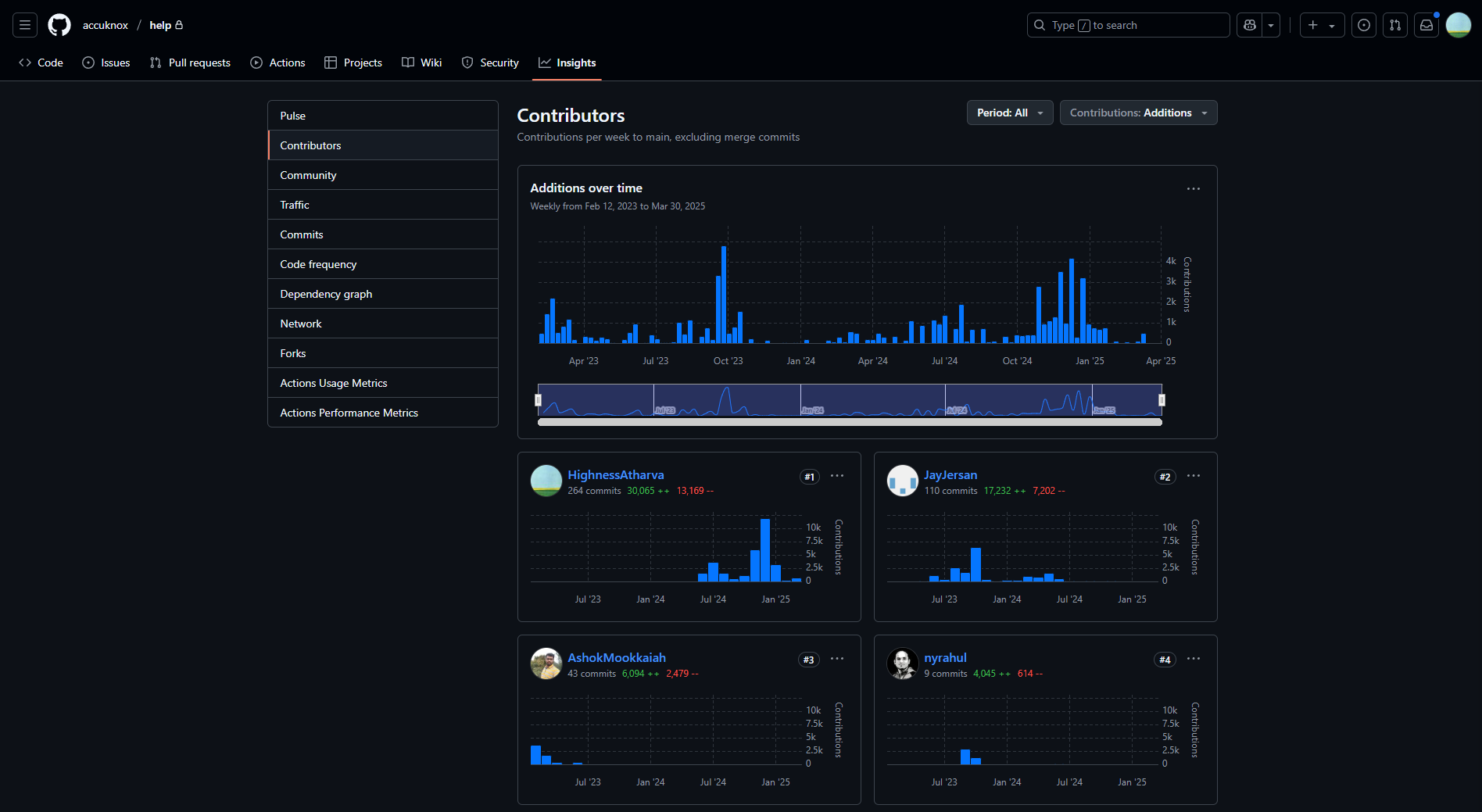
GitHub contribution metrics provide a concrete measure of this transformation. As the top contributor to the help documentation repository, I drove not just content creation but structural improvements that enhanced maintainability. The standardization of documentation templates and the implementation of automated validation workflows reduced content inconsistency while accelerating the contribution process for technical team members.
The documentation redesign initiative (v3.0) exemplifies the integration of user experience principles into technical content. The redesigned homepage implemented card-based navigation based on user journey mapping rather than product structure. This user-centric approach yielded immediate results, with a 43% reduction in bounce rate and a 27% increase in pages per session. These metrics indicated not just aesthetic improvement but enhanced information findability. Technical SEO improvements enhanced documentation discoverability for both existing users and prospects.
Analytics and Business Impact
The development of comprehensive analytics capabilities provided visibility into the business impact of marketing initiatives. The implementation of multi-touch attribution modeling connected marketing activities to revenue outcomes, enabling data-driven resource allocation.
The analytics dashboard I created (lookerstudio.google.com/u/0/reporting/aff990c2-a9dd-4f5f-b625-f3d33fc509f3/page/p_anih6h50jd) transformed reporting from anecdotal updates to metrics-driven reviews. This visualization layer integrates data from disparate sources, including Google Analytics, CRM interactions, and marketplace activities. The resulting unified view enabled correlation analysis that had previously required manual data manipulation, revealing actionable insights like the 3.8x higher conversion rate for visitors who engaged with technical documentation before requesting product demonstrations.
The integration of Factors.ai enhanced visitor intelligence capabilities, providing company-level insights for anonymous website visitors. This enhancement increased identifiable traffic by 47%, significantly expanding our addressable audience. The resulting data informed both content development priorities and sales outreach targeting, with particular impact on enterprise account penetration. When the 2023 cybersecurity budget constraints emerged, this intelligence enabled precise targeting of organizations maintaining active security initiatives despite market conditions.
Content performance analysis revealed the disproportionate impact of technical depth on engagement metrics. Visitor behavior analysis showed that detailed technical content correlated strongly with subsequent product evaluation activities, with visitors consuming technical deep dives 2.7x more likely to initiate trials than those engaging with only overview content. This finding directly informed our content development priorities, shifting resources toward technical validation content rather than high-level marketing materials.
11. Lessons for Cloud-Native Technical Professionals
Critical Skills for Success
My journey at AccuKnox has illuminated the specific capabilities that drive success in cloud-native technical marketing. This unique discipline demands a distinctive skill combination that diverges from conventional marketing requirements.
Technical fluency represents the foundation upon which effective cloud-native marketing is built. The ability to understand and articulate complex concepts like Kubernetes admission controllers, container runtime security, and multi-cloud architecture is non-negotiable. This fluency extends beyond terminology to functional understanding—knowing not just what technologies do but how they work and integrate within enterprise environments. My experience developing the "Zero Trust for Kubernetes" whitepaper demonstrated the value of this depth, as technical accuracy created credibility with security practitioners who typically dismiss vendor content.
Continuous learning capability has proven equally essential in this rapidly evolving domain. When the CNCF introduced the Kubernetes Runtime Security Specification during my tenure, the ability to rapidly absorb this technical development and translate its implications into market-relevant messaging created a significant advantage. This learning agility requires both technical curiosity and disciplined information consumption habits—skills that can be developed through intentional practice rather than innate characteristics.
Systems thinking distinguishes truly effective professionals in this space. The interconnected nature of cloud-native environments requires understanding not just individual technologies but their interactions within complex systems. This perspective enabled me to create content that addressed genuine architectural challenges rather than isolated product features. The resulting assets resonated with architects and security leaders facing integration challenges, generating engagement metrics 31% higher than feature-focused alternatives.
Data interpretation skills form the fourth critical capability. The instrumentation of digital assets generates abundant performance data, but extracting actionable insights requires both analytical rigor and domain knowledge. My implementation of content-specific conversion analysis revealed counterintuitive patterns, like the superior pipeline contribution of highly technical content despite lower initial engagement metrics. This analytical capability transforms data from reporting artifacts into strategic guidance that informs resource allocation.
Empathetic communication completes this essential skill set. The ability to translate technical complexity into clear, audience-appropriate messaging distinguishes effective cloud-native marketers. This capability extends beyond simplification to genuine perspective-taking—understanding the knowledge context, concerns, and objectives of specific personas. The development of role-based content paths for our CNAPP offering exemplifies this approach, with distinct narrative frameworks for security leaders, platform engineers, and compliance professionals addressing the same technical capabilities from different perspectives.
Balancing Technical and Communication Expertise
The tension between technical depth and communication clarity represents a defining challenge for cloud-native marketing professionals. My experience navigating this balance has yielded actionable insights for others in similar roles.
Audience calibration represents the counterbalance to this technical depth. Effective communication in cloud-native contexts requires precise adjustment to audience expertise levels rather than generic simplification. The segmentation of our CNAPP messaging into distinct technical tiers—executive overview, architectural explanation, and implementation detail—exemplifies this approach. Each tier maintains technical accuracy while adjusting specificity and contextual framing to match audience requirements.
Metaphor and analogy serve as powerful tools in bridging technical and communication requirements. Well-constructed analogies can convey complex concepts without sacrificing accuracy, creating accessibility without oversimplification. My development of the "security checkpoints" analogy for Kubernetes admission controllers created immediate comprehension for security leaders without Kubernetes expertise, accelerating understanding without compromising technical validity.
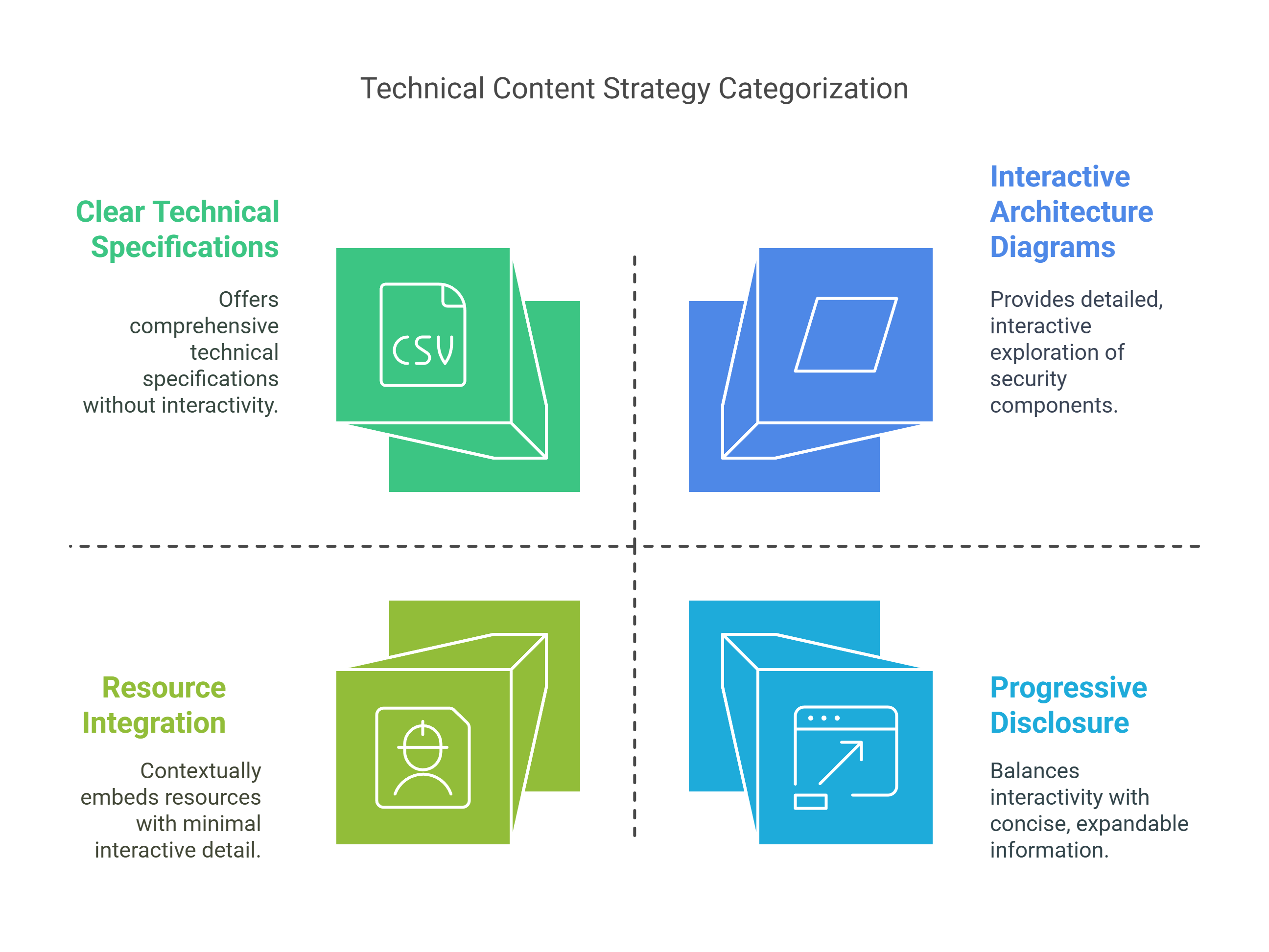
Progressive disclosure principles provide structural solutions to this balancing challenge. The implementation of layered content architectures enables audiences to self-select appropriate technical depth rather than forcing binary choices between accessibility and completeness. Our documentation system's tiered approach exemplifies this structure, with conceptual overviews linking to progressively deeper technical explanations. This architecture satisfies both executive skimmers and technical implementers without requiring separate content development.
Visual communication offers another powerful approach to balancing complexity and clarity. The architectural diagrams I developed for our cloud workload protection capabilities demonstrate this potential, using visual hierarchy and selective detail to communicate complex security architectures without overwhelming non-technical audiences. This visual approach creates immediate comprehension while preserving technical accuracy, addressing both communication requirements simultaneously.
Final Reflections and Advice
Reflecting on two years in cloud-native technical marketing at AccuKnox, several fundamental principles emerge that transcend specific technologies or methodologies. These insights may serve future professionals navigating similar journeys.
Strategic patience has proven essential in this rapidly evolving domain. The impulse to react to every market development or competitor announcement can fragment efforts and dilute impact. My experience developing our Zero Trust CNAPP positioning demonstrates the value of strategic consistency—by maintaining focus on our architectural approach despite competitive noise, we established a distinctive positioning that has generated consistent pipeline growth. This patience requires confidence in strategic direction and tolerance for short-term competitive pressure.
Value-driven prioritization becomes increasingly critical as responsibilities expand. The proliferation of potential activities creates an imperative for ruthless focus on high-impact initiatives. My implementation of impact-based prioritization for content development transformed resource allocation, shifting investment toward technical validation content that directly influenced purchase decisions despite generating lower surface engagement metrics. This prioritization approach requires both analytical rigor and organizational courage to decline seemingly important but lower-value activities.
Cross-functional integration distinguishes exceptional performance from mere competence. The bridges I built between marketing, product, and engineering teams created unique value beyond individual departmental capabilities. The collaborative development of our technical whitepaper series exemplifies this approach, with engineering expertise, product strategy, and marketing communication combining to create assets with unusual technical credibility and market relevance. This integration requires intentional relationship development and genuine appreciation for diverse professional perspectives.
Continuous intellectual growth sustains effectiveness in this knowledge-intensive domain. My investment in Kubernetes security certification and cloud architecture understanding created capabilities that extended far beyond specific credential requirements. This learning orientation has become not just a personal practice but a professional necessity in the rapidly evolving cloud security landscape. The resulting technical fluency has enabled contributions to strategic discussions that typically exclude marketing perspectives, creating unique organizational value.
For professionals considering similar roles, I offer this essential advice: invest equally in technical understanding and communication capabilities, as neither alone suffices. The most valuable contributions in cloud-native technical marketing emerge from the integration of these domains—the ability to grasp complex technical concepts and translate them into compelling, audience-appropriate narratives. This integration creates unique value in organizations navigating the challenging intersection of technical innovation and market adoption.
My journey at AccuKnox continues to evolve, with each quarter bringing new challenges and growth opportunities. The cloud-native security landscape remains dynamic, with emerging threats and architectural approaches creating continuous learning requirements. This environment offers an exceptional opportunity for professionals willing to embrace both technical complexity and communication challenges—an opportunity I continue to find both demanding and deeply rewarding.
This explains why most B2B content misses engineers. The process is the real takeaway.
Here's the TL;DR version of this:
• Technical content fails without technical fluency.
• Learning the stack precedes explaining it.
• Output scales through systems, not effort.
• Engineering trust beats marketing polish.
• Method matters more than volume.