

Distance From Your Goal Predicts Every Decision You Make
How Far Dreams Make You Soft and Why Almost There Changes Everything

Something strange happens when you get close to something you actually want.
You stop wanting everything else.
Not because you’ve become ascetic or enlightened. Because your brain has finally locked onto a target it believes is real. And now every dopamine hit you’d normally chase—the latte, the sneakers, the weekend trip—looks like friction. Like theft of momentum.

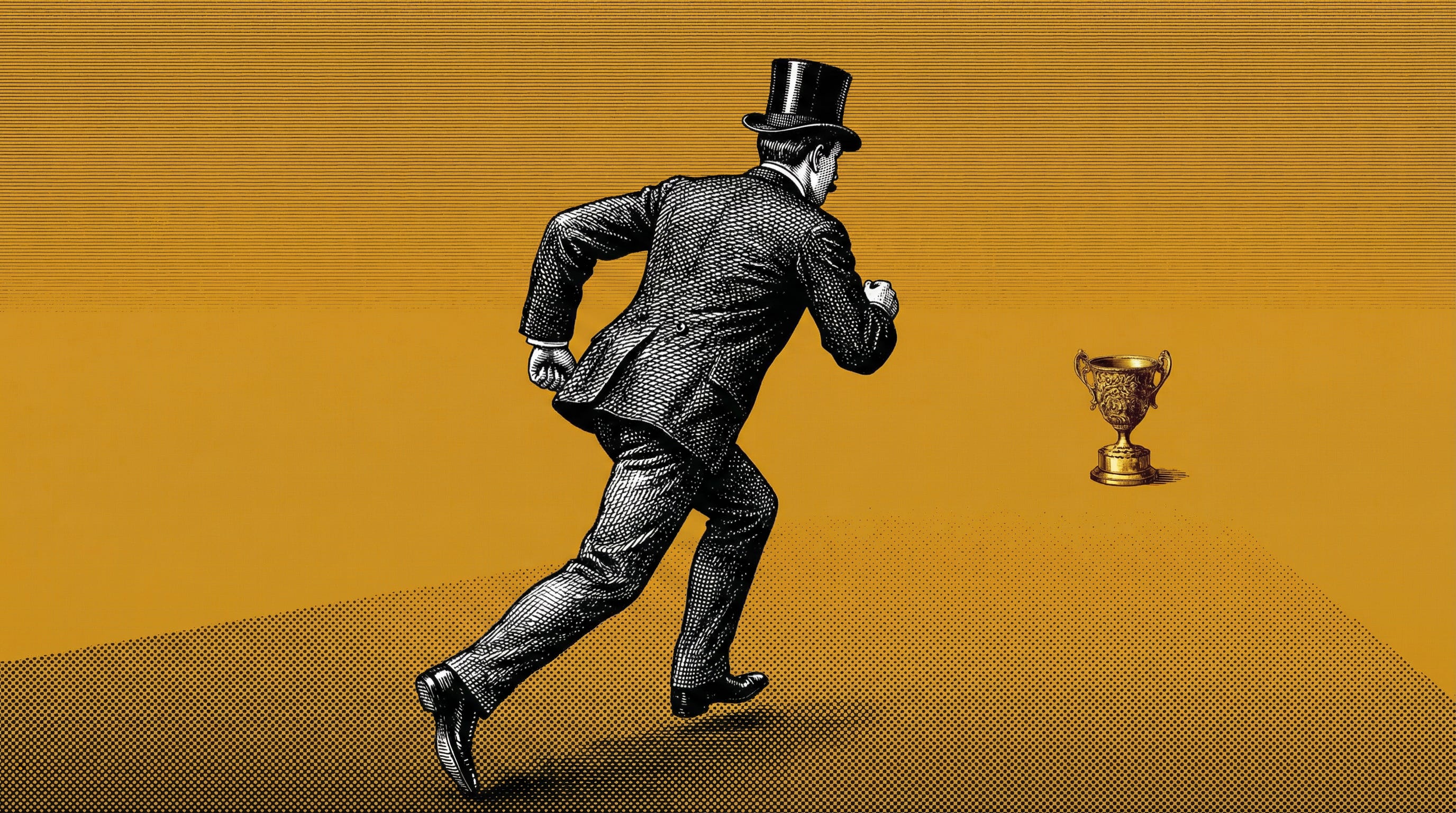
The Distance Problem
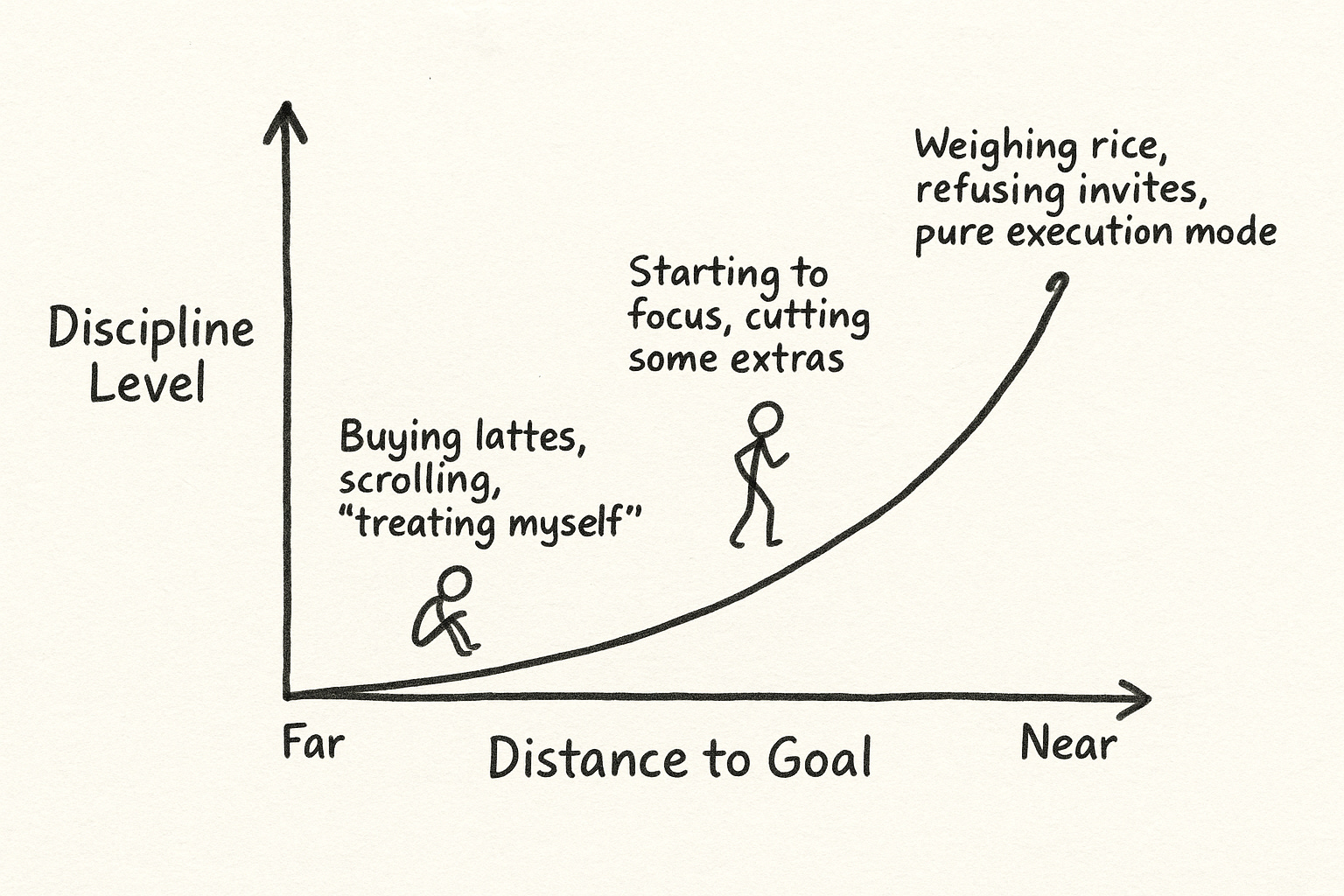
When a goal sits far on the horizon, your mind doesn’t really believe in it. It can’t feel it. So it does what minds do when starved of real progress: it finds symbolic wins. Small pleasures. Manageable victories.
You buy the fancy coffee because owning a café chain feels absurd. You upgrade your phone because building the company that could afford any phone feels impossible. You scroll travel Instagram because actually having the freedom to disappear for months seems like fantasy.
Your brain craves progress. When the big goal won’t deliver, it settles for tiny ones.
The Avocado Toast Inversion
Here’s the paradox: the person earning $50K a year buys small luxuries religiously.
The Rolls Royce is so far away it might as well be on Mars.
But the entrepreneur who’s two deals away from actually buying one? They’re eating ramen and taking the bus.
Not because they can’t afford the luxuries.
Because those luxuries now have a cost they can feel: delay.
Every $500 spent is $500 not compounding toward the thing that’s suddenly, viscerally real.
The Rolls isn’t an abstraction anymore.
It’s a finish line they can see.
And finish lines make you sprint, not window-shop.
What Proximity Does to People
The founder nearing product-market fit stops taking vacations. The runway matters now. Every month bought is another shot at escape velocity.
The mid-level employee far from equity that’ll change their life?
They’re booking weekend getaways.
Because what else is the point?

The casual fitness enthusiast eats healthy-ish, cheats on weekends, skips the gym when tired. The bodybuilder two weeks out from competition? They’re weighing rice grains on a scale. The stage is real now.
The hobby writer buys Moleskines and ergonomic keyboards and productivity apps. The author with a publishing deal pending? Just edits. Obsessively. Nothing else matters.
The beginner trader chases quick profits because financial independence is decades away—might as well feel something now. The investor actually close to their number? Pure defense. Preservation over excitement. The finish line is too close to gamble.
The student with months until exams watches Netflix guilt-free. Two weeks out? Every minute is warfare.
Why This Matters
This isn’t about willpower or discipline. It’s about belief.
When you don’t believe the big thing is actually achievable, your brain optimizes for smaller, guaranteed wins. When you start believing—when you can feel it coming—everything that isn’t moving you toward it feels like betrayal.
Proximity turns dreams into deadlines. And deadlines make you ruthless.
The Actionable Insight
If you want to know whether you actually believe in your goal, look at your behavior. Are you still buying symbolic progress? Still medicating with minor pleasures? Still saying yes to things that don’t compound?
Then some part of you doesn’t believe yet.
The moment belief kicks in—the moment the thing feels real and close—you won’t need discipline. You’ll just stop wanting the distractions. They’ll look like what they are: distance between you and the thing you actually want.
The farther your dream feels, the louder your life gets. The closer it comes, the quieter you become. And the quieter you become, the faster you move.
The proximity insight explains so much behavior. Deadlines convert dreams into action.
Here's the TL;DR version of this:
• Humans optimize for what feels attainable.
• Distant goals invite symbolic progress.
• Proximity rewrites priorities automatically.
• Discipline is replaced by inevitability.
• Behavior reveals belief faster than intention.