

Building AI Marketing Teams with Claude Skills
How to Encode Your Marketing SOPs into Claude with Skill Files & MCPs (A Dummy's Guide)

You are probably still chatting with AI. Typing a prompt, reading the output, copying it somewhere, and repeating. That is a workflow from 2023. The shift already happened, and most marketers missed it.
The real edge is not in better prompts. It is in Skill Libraries—structured, reusable systems that encode your best marketing SOPs into files an AI executes the same way every time, without you re-explaining anything.
This is how you turn Claude from a chatbot into a marketing team. You teach it your methodology once. Then you deploy that expertise across every project, client, and campaign, at a fraction of the cost of hiring.
The Difference Between Chatting and Engineering
A traditional marketing team has a researcher, a copywriter, a designer, and an analyst. Each person brings a specific method—a way of doing things that matches your quality bar.
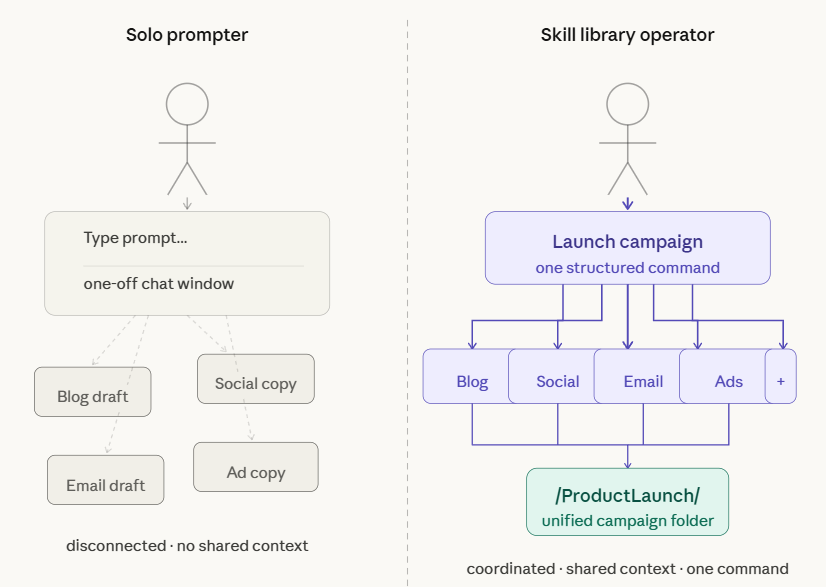
An AI Marketing Skill Library is the digital equivalent of that collective expertise. It is a structured collection of folders and markdown files that define exactly how each marketing task should be performed. Instead of prompting “write a blog post” and hoping for the best, you hand the AI a Content Creation Skill that contains your storytelling frameworks, your SEO checklists, and your brand voice constraints.
The architecture has three layers. First, the Context Layer—who you are, who you sell to, what your brand sounds like. Second, the Skills Layer—the step-by-step procedures for each type of work. Third, the Tools Layer—the external applications the AI connects to, like search engines or image generators.
When these layers work together, the AI stops being a generic assistant and starts behaving like a trained team member who already knows the playbook.
What You Actually Need
A Claude subscription alone will not get you here. You need an environment where the AI can read your files and interact with external tools.
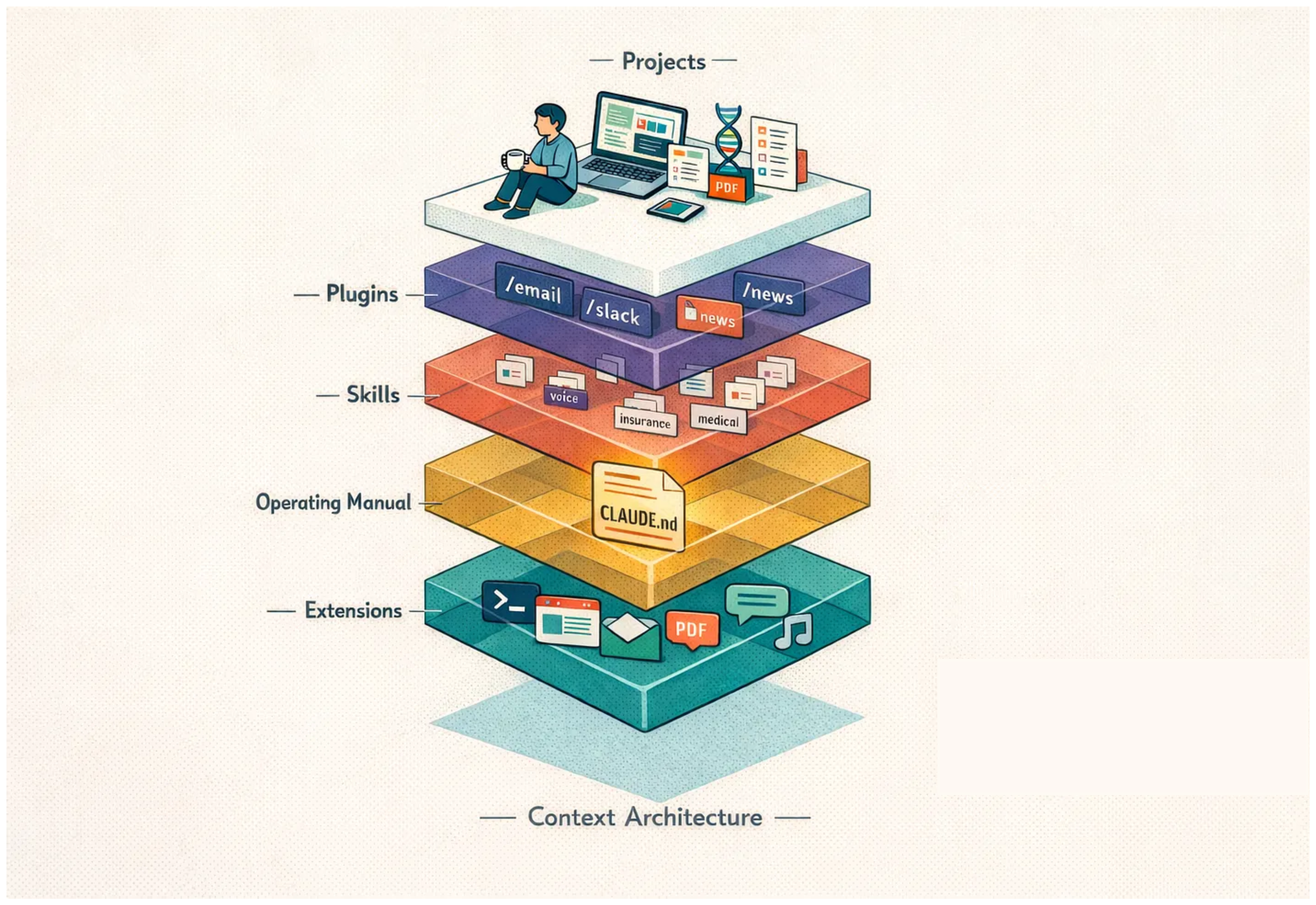
Claude Code or Claude Desktop gives Claude access to your local file system. Your skills live in folders on your machine, not in a chat window that resets every session. Model Context Protocol (MCP) servers act as connectors—think of them as USB ports for your AI. Plug in Perplexity for live web research. Plug in an image generation tool for on-brand visuals. Each MCP extends what Claude can do without you changing how you interact with it.
The Skill Creator is a specialized utility that takes your messy, human-written SOPs and converts them into structured Skill Files. These are markdown documents with precise instructions the AI follows deterministically. Your expertise becomes executable.
Building the Context Layer
Before you build a single skill, you need to give the AI context. An AI without context produces generic output. You want a marketing partner that understands your specific positioning.
Create a project folder with a context/ directory inside it. Add your Brand Guidelines—colors, typography, tone of voice. Add Product Sheets with detailed technical and positioning information. Add Audience Personas that describe who you sell to, what they struggle with, and what language they use.
Then create a navigation file. Call it clat.md or whatever makes sense. This file acts as a map that tells the AI where to find things inside your project. “For brand voice, look in /context/brand.md. For audience data, look in /context/personas.md.” This small step eliminates the single biggest source of AI hallucination in marketing workflows: missing context.
The Five Core Skills
A functional marketing library needs five skills. Each one replaces a specific role on a traditional team.
The Research and Strategy Skill moves you from a blank page to a comprehensive strategy brief in minutes. It connects to Perplexity via MCP, identifies your top competitors, analyzes their recent content, cross-references findings against your USP, and outputs a SWOT analysis with a three-month action plan. You issue a single command like /research analyze the current state of cloud-native security and receive a formatted brief in your team’s standard template. No manual searching. No tab-switching. No copy-paste assembly.
The Social Media Content Skill produces high-volume, on-brand content. You feed the Skill Creator your best-performing past posts—the ones with the highest engagement. The AI analyzes your hook patterns, your CTA placement, your sentence length, and your narrative structure. It builds a Storytelling Framework that every future piece of content follows. The output sounds like you because it was trained on you.
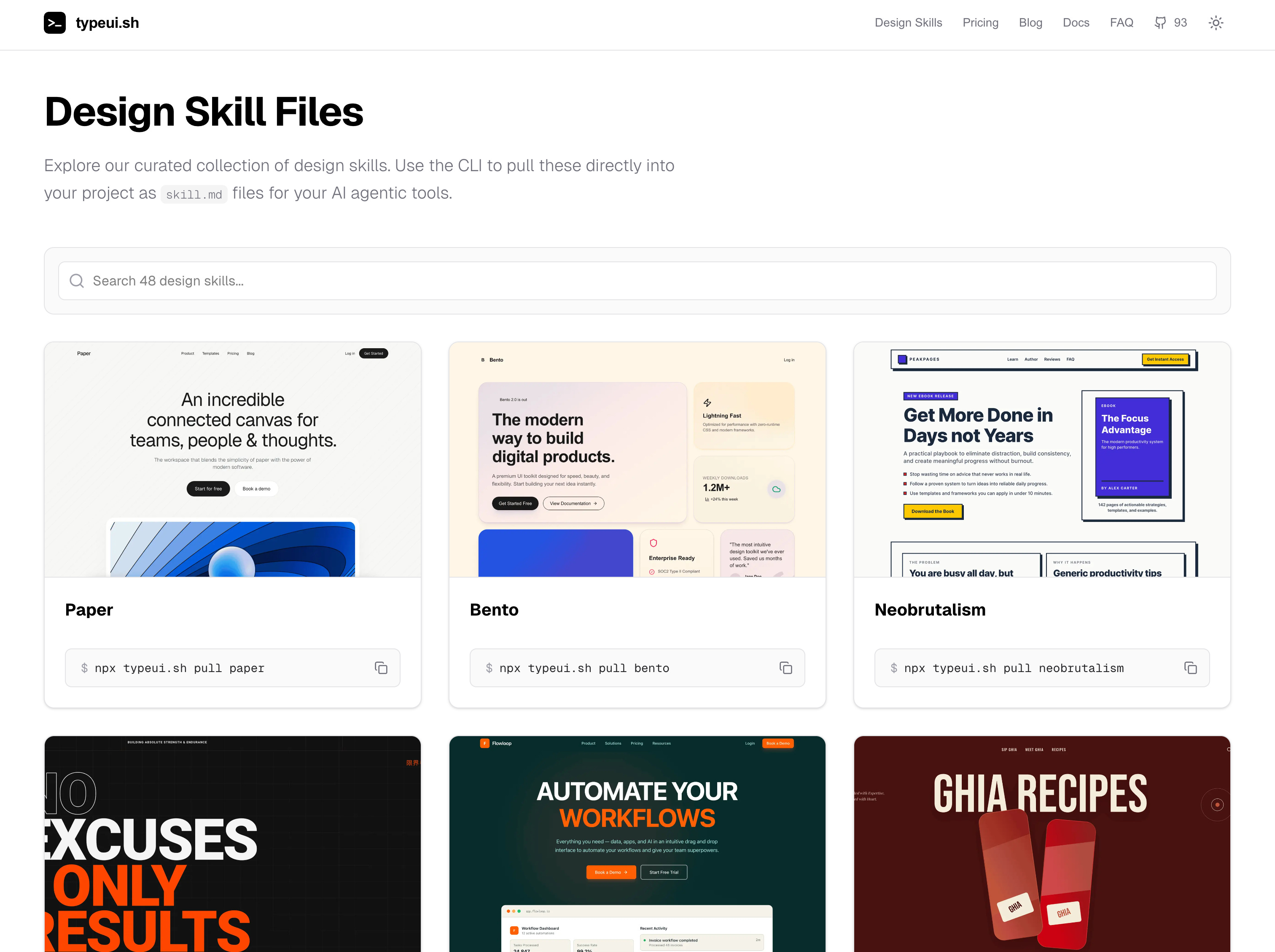
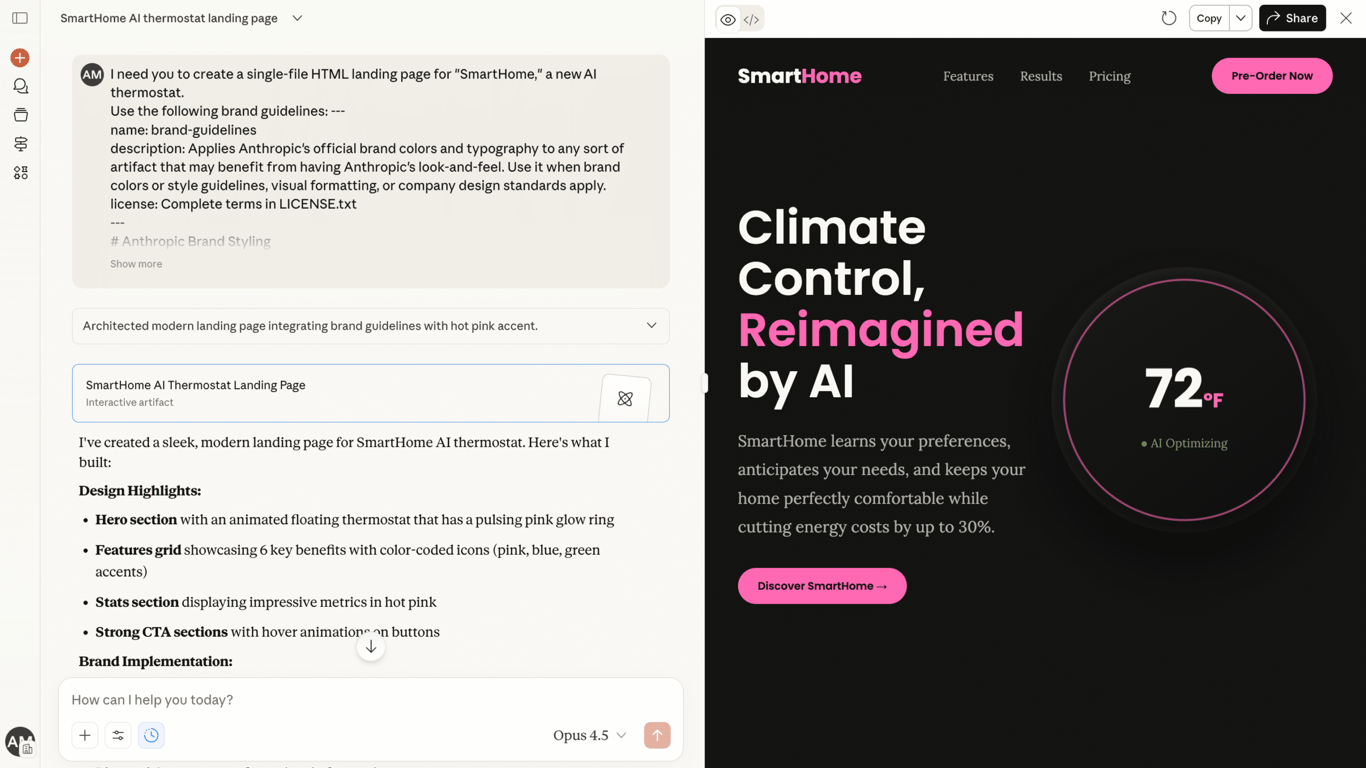
The Creative Designer Skill generates on-brand visuals without a design team. In the skill file, you hard-code your brand’s hex codes, typography preferences, and visual style. Define a “Minimalist Blueprint” aesthetic with specific color values, and every image the AI generates for any blog post or social campaign will automatically follow those constraints. You define the visual identity once. The AI applies it forever.
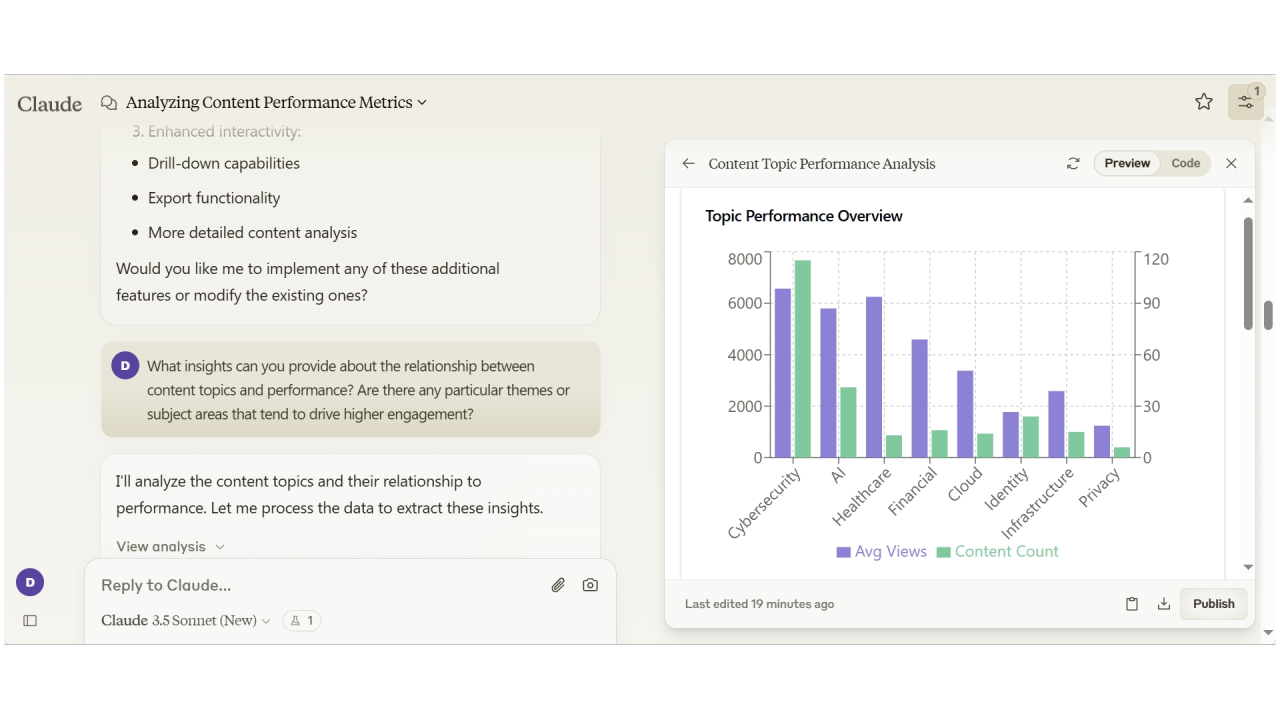
The Data Analysis Skill turns spreadsheet chaos into actionable insights. It ingests CSV or JSON files, identifies trends based on your KPIs, and can even generate interactive dashboards—small HTML or JavaScript artifacts that let you click through marketing performance data in real time without needing a BI tool.
The Campaign Presenter Skill handles the final mile—getting work in front of stakeholders. It takes the outputs from the other four skills and packages them into a landing page, a slide deck outline, or a campaign brief. Research from Skill 1 aligns with visuals from Skill 3 and copy from Skill 2. The presentation writes itself because the input is already structured.
Orchestration Changes Everything
The real power is not any single skill. It is Multi-Skill Orchestration—chaining skills together to execute complex workflows from a single instruction.
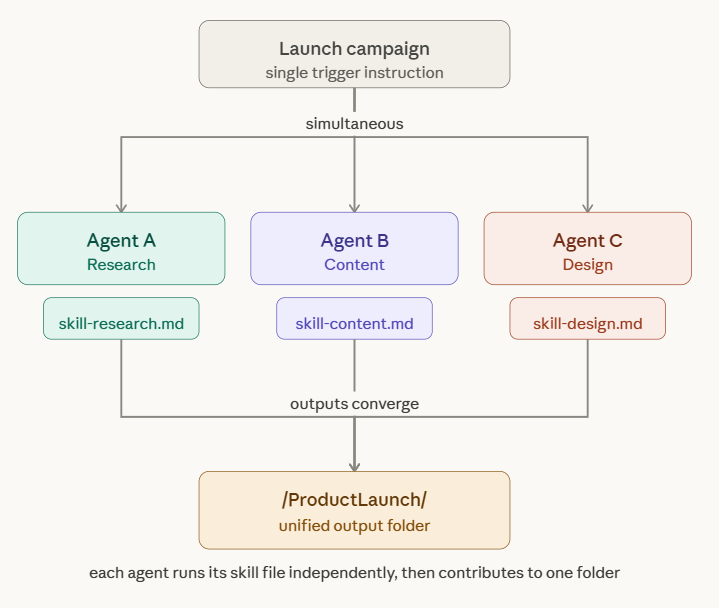
Say you have a product launch. In a traditional setup, you spend days coordinating between researchers, writers, and designers. With a Skill Library, you issue one instruction: “Using the Strategy Skill, research competitor positioning for this launch. Then use the Content Skill to write ten social posts based on that research. Finally, use the Designer Skill to create the visuals for each post and save everything in /ProductLaunch/.”
Claude acts as the team lead. It dispatches sub-agents. One agent takes the Research Skill and queries the web. A second waits for the research to finish, then takes the Content Skill. A third handles the visual generation in parallel. A task that would take a human team a full week completes in roughly 12 minutes.
The cost savings are not incremental. They are structural. You are not replacing one person’s output. You are collapsing the coordination overhead between four or five roles into a single orchestrated workflow.
Portability Makes This a Product
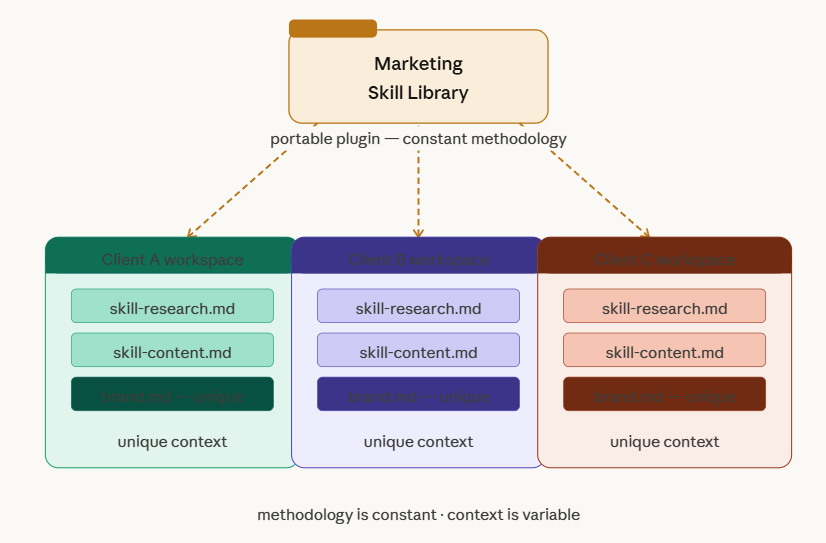
Once your skills are built, package them into a portable plugin—a single folder or compressed file containing your entire marketing methodology.
If you run an agency, this is your most valuable asset. When you onboard a new client, create a new folder for their context files—logo, audience data, product information. Then plug in your Skill Library. The AI now executes research your way, writes copy your way, and designs assets your way, applied to the new client’s data.
You have turned your expertise into a product. Your methodology scales without you. The marginal cost of onboarding a new client drops toward zero because the system already knows how to do the work. The only variable is the client’s context.
Where This Is Going
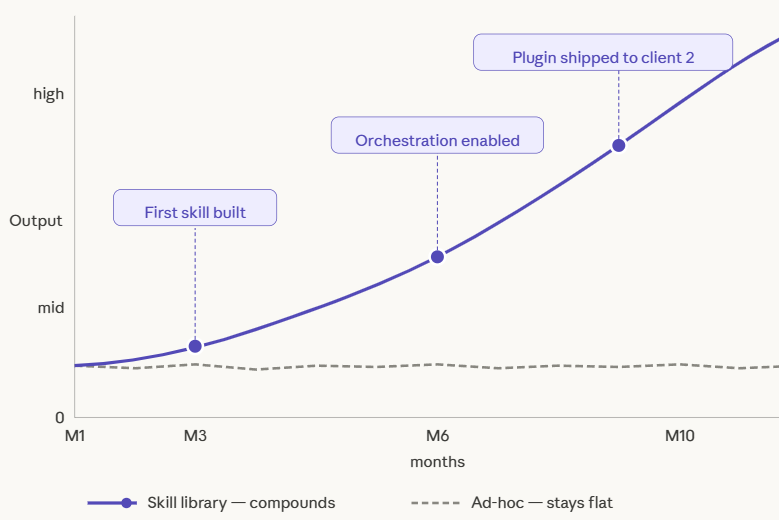
The shift from “prompt-and-pray” to system-level AI workflows is already underway. The practitioners who build structured skill libraries now will have a compounding advantage over those who are still typing ad-hoc prompts into a chat window six months from now.
Start small. Take your Research SOP—the one you run every time you onboard a new project—and convert it into a Skill File this week. Once it works, build the Content Skill. Then the Designer Skill. Within a month, you will have a full AI marketing team running inside your computer, operational around the clock, on-brand, and costing less than a single contractor’s monthly invoice.
The people who treat AI as a chatbot will plateau. The people who treat AI as infrastructure will compound.